7 Best Snap Fasteners For Wool Clutch Closures
Choosing the right snap fastener for wool clutches ensures durability and style. Explore our top 7 picks for secure, functional closures for your next project.
Choosing the right closure for a wool clutch is the final, critical step that transforms a handmade item into a functional accessory. A poor choice can stretch out your stitches or pull through the fabric, while the right hardware ensures your hard work remains secure. Over my two decades in the craft, I have learned that the weight of the yarn and the density of your gauge dictate the hardware you should choose. This guide will help you select a snap that complements your knitting rather than compromising it.
Prym Sew-On Press Fasteners: The Reliable Classic


These are the workhorses of the knitting world, and for good reason. Because they are sewn on rather than punched through the fabric, they don’t create permanent holes in your delicate wool.
They are ideal for finer gauges or delicate yarns like alpaca or merino that might fray if punctured by a metal prong. By distributing the tension across several stitches, they prevent the "puckering" effect that often ruins the look of a finished clutch flap.
The trade-off is that they require a bit of patience with a needle and thread. If you aren’t careful with your sewing, they can feel slightly loose over time. Always use a sturdy buttonhole twist or a doubled-up strand of your project yarn to ensure the fastener stays anchored.
Dritz Heavy-Duty Snap Fasteners for Durability

When you are working with a thick, felted wool or a heavy-gauge wool tweed, standard snaps often fail to stay closed. Dritz Heavy-Duty snaps provide the mechanical strength needed to keep a bulky bag shut.
These are best suited for projects that will see daily use, like a market clutch or a tablet sleeve. Because they require a setting tool, they offer a very secure, permanent grip that won’t pop open when the bag is stuffed full.
Be aware that these require a significant amount of pressure to install. If your wool is loosely knitted, the metal teeth might tear through the fibers, so ensure your fabric is heavily reinforced before you begin.
KAM Snaps Plastic Sets for Colorful Knit Projects

KAM snaps are a favorite among knitters who love to coordinate their hardware with their yarn colors. They are lightweight, rust-proof, and incredibly easy to install with a simple pair of pliers.
Because they are made of resin, they are much gentler on the yarn than metal alternatives. They won’t snag your fiber or leave metallic residue, making them a fantastic choice for light-colored wools or delicate hand-dyes.
However, they are not as "low profile" as metal snaps and can be a bit bulky. They work best on projects with a lining or a double-layered flap, as the plastic post needs a bit of thickness to "bite" onto securely.
YKK Metal Snap Buttons for Secure Wool Closures

YKK is the industry standard for a reason; their metal snaps are consistent, smooth, and incredibly durable. If you want your clutch to have a professional, store-bought finish, these are the gold standard.
They provide a very crisp "click" when closed, which gives you confidence that your belongings are safe. They are particularly well-suited for structured, non-stretchy wools like boiled wool or dense, tight-gauge stockinette.
The downside is that they are unforgiving. Once you set a metal snap, moving it is nearly impossible without damaging the surrounding stitches. Measure twice and mark your placement with a removable stitch marker before you commit to the punch.
Gunold Sew-On Magnetic Snaps for Easy Access

Magnetic snaps are a dream for anyone who struggles with dexterity or wants a "self-closing" clutch. The magnets find each other automatically, meaning you don’t have to fumble to align the male and female parts.
These sew-on versions are superior to the pronged variety because they don’t require you to cut holes in your beautiful knit fabric. You simply stitch the fabric tabs onto the inside of your clutch, keeping the integrity of your wool intact.
The main nuance here is strength; ensure the magnet is strong enough to hold through the thickness of your wool. If your clutch is thick, a weak magnet will pop open at the slightest movement, rendering the closure useless.
Merchant & Mills Brass Snaps for Elegant Finishes
Sometimes a project calls for a touch of class, and Merchant & Mills hardware delivers exactly that. Their brass snaps have a beautiful, matte finish that ages gracefully alongside natural wool fibers.
These are perfect for artisanal, high-end projects where you want the hardware to be a design feature rather than a hidden utility. They feel substantial in the hand and elevate the overall aesthetic of a rustic, hand-knitted bag.
Because they are brass, they are softer than steel snaps and can be prone to scratching if you are rough with them. Treat these as a finishing touch for a project you intend to keep or gift to someone who appreciates the finer details.
Hemline Press Studs for Lightweight Clutch Bags
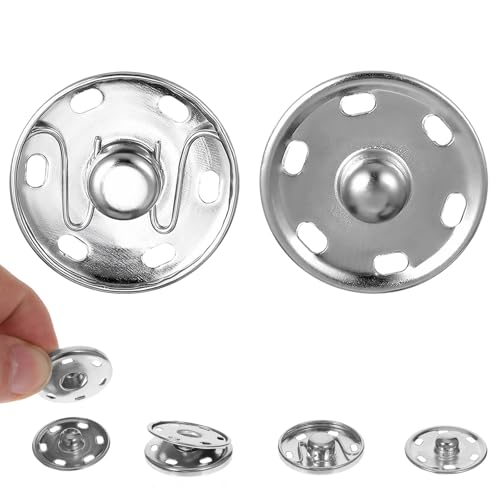
Hemline press studs are the reliable, no-fuss option for small projects like coin purses or delicate evening clutches. They are slim, unobtrusive, and come in a variety of sizes to match your specific yarn weight.
If you are working with a lace-weight or fingering-weight wool, a heavy-duty snap will weigh down the flap and distort the fabric. Hemline’s smaller studs are lightweight enough to maintain the drape of your knitting.
They are not designed for heavy loads or daily, high-stress use. Use these for light items only, and always reinforce the back of your knitting with a small scrap of cotton fabric to prevent the stud from pulling through the stitches.
How to Attach Snaps Without Damaging Your Wool
The biggest mistake I see knitters make is punching hardware directly into a single layer of loose knitting. You must reinforce the area to prevent the hardware from migrating or tearing the yarn.
- Use a small square of iron-on interfacing behind the snap location.
- Work a small patch of felted wool or scrap fabric into the inside of the flap.
- Avoid placing snaps on areas with loose cables or lace, as these are structurally weak.
Always reinforce the "anchor" points before you even consider the hardware. If you are using a mechanical snap, ensure the metal does not touch the yarn directly, as the friction will eventually cause the wool to pill or break.
Stabilizing Your Knit Fabric for Heavy Hardware
Knitting is inherently elastic, which is the exact opposite of what a snap needs to function. To make a snap stay put, you have to kill that stretch at the point of attachment.
I highly recommend sewing a small piece of non-stretch ribbon or twill tape to the underside of your flap. This acts as a stabilizer, taking the tension off the yarn and transferring it to the ribbon instead.
Without this stabilization, your snap will eventually create a "hole" in your knitting as it tugs against the weight of the bag’s contents. A few minutes of prep here will save your project from looking worn-out after just a few uses.
Choosing Between Magnetic and Mechanical Snaps
The choice between magnetic and mechanical snaps often comes down to the "life" of the bag. Magnetic snaps are fantastic for accessibility, but they can be accidentally opened by keys or other metal objects in your bag.
Mechanical snaps, like press studs or heavy-duty buttons, provide a tactile locking sensation. If you are carrying valuables, I always suggest a mechanical snap because it requires an intentional effort to open.
Consider your lifestyle: do you need to reach into your bag with one hand while holding a coffee, or do you need a secure closure for travel? Match the hardware to the bag’s intended function, not just the aesthetic of the yarn.
Selecting the right snap is the final act of care for your knitted clutch, turning a piece of fabric into a reliable daily companion. By prioritizing stabilization and matching the hardware weight to your yarn, you ensure your work stays beautiful for years to come. Remember that a bit of extra reinforcement now prevents the frustration of repairs later. Happy knitting, and may your finished projects be as functional as they are lovely.