6 Best Pattern Graph Papers for Design Mapping
Discover the top 6 pattern graph papers for design mapping. This guide explores essential tools to help you streamline layouts and improve precision in projects.
Translating a creative spark into a wearable garment requires more than just yarn and needles; it demands a map. Whether you are drafting a complex Fair Isle sweater or a simple textured cowl, the right graph paper acts as the blueprint for your design. Choosing the wrong grid can lead to distorted motifs and frustrating frogging sessions. This guide explores the best tools to help you bridge the gap between your imagination and your finished fabric.
Stitchmastery Software: The Professional Choice
Stitchmastery is widely considered the gold standard for designers who need to move beyond simple sketching. It offers a sophisticated environment that handles the complexities of knitting symbols, stitch counts, and repeat patterns with ease.
If you are planning to publish your patterns or sell them on platforms like Ravelry, this software is indispensable. It automatically generates written instructions from your charts, saving you hours of manual transcription and reducing the risk of human error.
The learning curve is steeper than a pencil-and-paper approach, but the payoff is professional-grade accuracy. It is the best choice for designers who want to ensure their charts are legible and technically sound for other knitters to follow.
Vogue Knitting Graph Paper: The Classic Standard


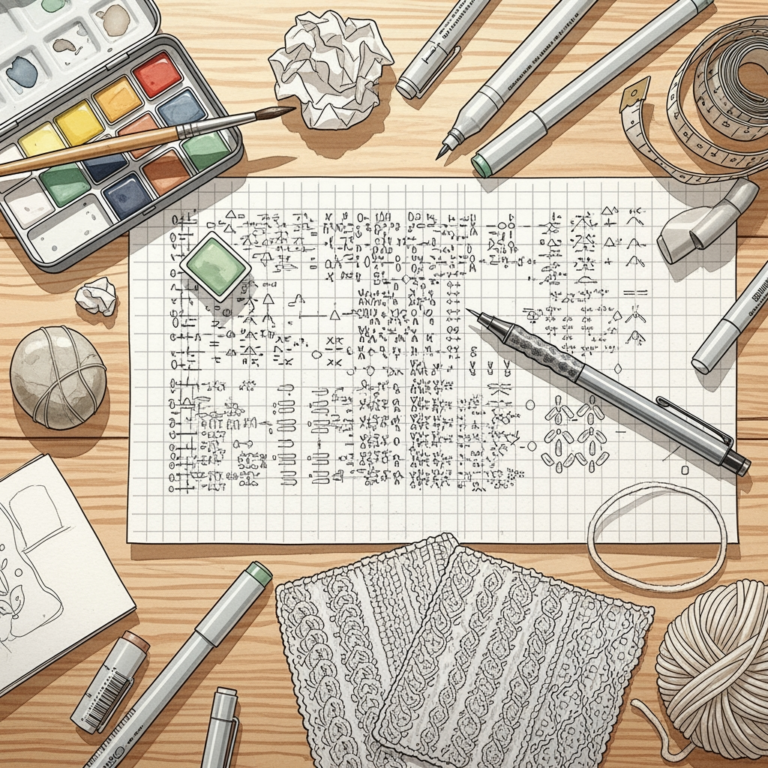
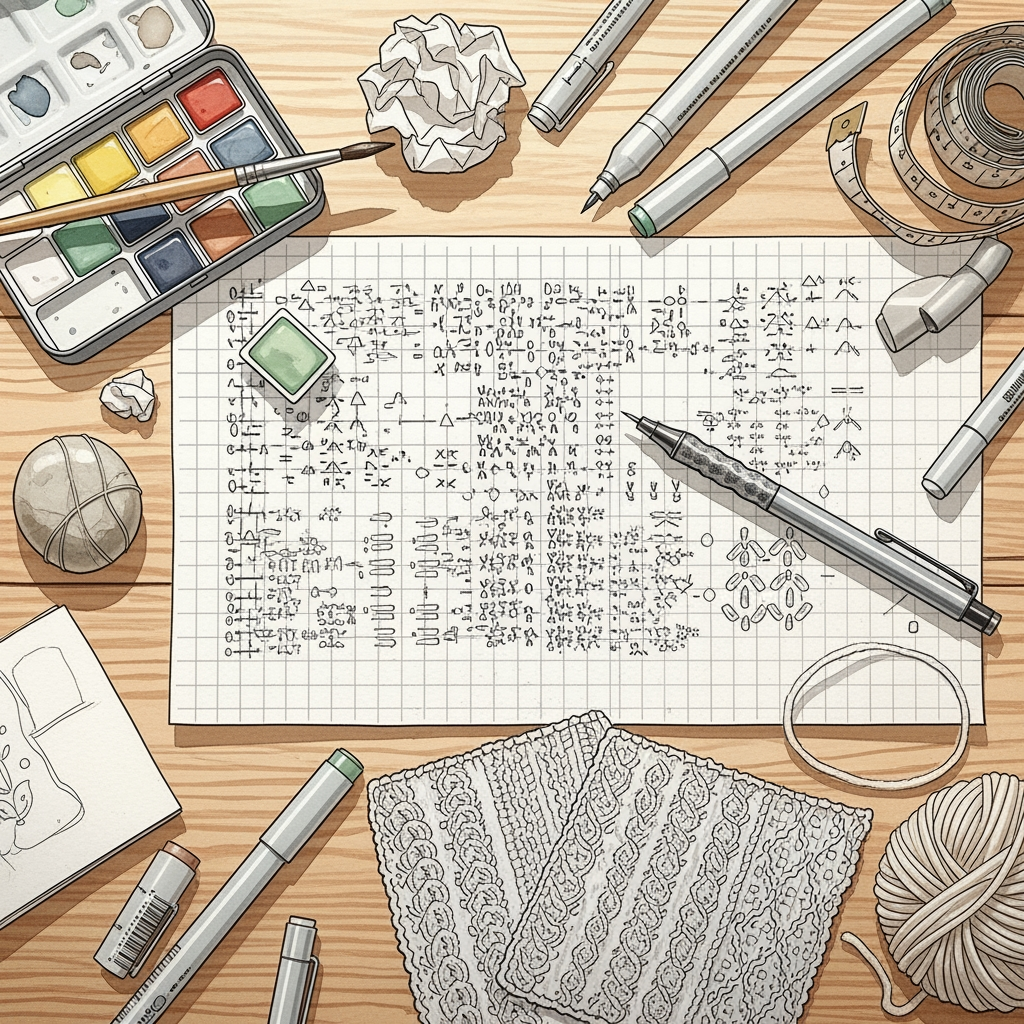
There is something undeniably tactile about sketching a design on physical paper before casting on. Vogue Knitting’s graph paper is designed specifically for the proportions of knitting, recognizing that stitches are rarely perfect squares.
This paper is a fantastic tool for knitters who want to visualize color changes in stranded work without staring at a screen. It helps you see the flow of a motif in relation to the overall garment shape, which is crucial for balanced design.
While it lacks the "undo" button of digital tools, it encourages a slower, more deliberate design process. It remains a staple for those who find digital interfaces distracting or who prefer the tactile satisfaction of physical drafting.
Chart Minder: Best Digital Mapping Interface
Chart Minder has revolutionized the way many independent designers create and share their charts online. It is a browser-based tool that feels intuitive, allowing you to build complex designs without needing to install heavy software.
The standout feature here is the ability to easily import images and convert them into stitch charts. This is a game-changer if you are working from a sketch or a photograph and want to translate it into a knit-ready format.
It is particularly useful for collaborative projects, as you can easily share your charts with test knitters. Just keep in mind that while it is powerful, it is best suited for those who are comfortable with web-based workflows and cloud storage.
KnitPro Designer’s Graph Paper: Precise Grids

KnitPro offers a range of graph paper options that cater to different stitch-to-row ratios. This is vital because the way your yarn behaves determines whether your stitches are tall, wide, or perfectly square.
If you are working with a high-twist wool that creates dense, tall stitches, a standard square grid will make your design look squashed. KnitPro’s specialized grids allow you to account for these physical realities before you ever pick up a needle.
This tool is excellent for knitters who are serious about fit and proportion. By selecting the right grid ratio, you ensure that the chart you draw is exactly what you will see once the fabric is blocked and settled.
Stitch Fiddle: Best Free Web-Based Mapping Tool
Stitch Fiddle is often the first stop for knitters venturing into chart design for the first time. It is free, accessible, and remarkably capable of handling basic colorwork and lace motifs.
The interface is simple enough that you can start mapping a design in minutes without reading a manual. It is perfect for small projects like hats or mitts where you want to experiment with a quick idea without a significant time investment.
While it may lack the advanced features of paid software, its accessibility is its greatest strength. It is a low-stakes environment that encourages experimentation, which is exactly what a designer needs when they are finding their creative voice.
The Knitter’s Graph Paper Journal: Best Portable

For the knitter who finds inspiration on the train or in the park, a dedicated journal is a must-have. These journals combine graph paper with space for notes, yarn swatches, and needle size reminders.
Having your notes and designs in one place makes it much easier to replicate a successful project later. It prevents the common problem of losing a brilliant design idea on a scrap piece of paper that eventually gets tossed away.
This is the best option for knitters who value a tangible record of their design journey. It turns your project development into a keepsake, documenting not just the charts, but the evolution of your skills over time.
Why Gauge Accuracy Matters for Pattern Mapping
Gauge is the physical reality that dictates every stitch you make. If your gauge swatch is off by even half a stitch per inch, your final garment will either be a tent or a tourniquet.
When mapping a pattern, you must design for the fabric you intend to create, not an idealized version. If your yarn is a heavy, single-ply wool, it will behave differently than a slick, multi-ply superwash merino.
Always swatch before you start charting. Your graph paper should reflect the stitch-to-row ratio of your actual, blocked fabric to ensure the final design matches your initial vision.
Choosing Between Square and Rectangular Grids
Not all stitches are created equal, and your grid paper should reflect that reality. Most knitting stitches are wider than they are tall, meaning a square grid will naturally distort your design.
If you use a square grid for a rectangular stitch, your chart will look stretched vertically. This is why specialized "knitting" graph paper often uses rectangular cells to compensate for the natural geometry of the stitch.
When in doubt, knit a 4-inch square, count your stitches and rows, and calculate your ratio. Use this ratio to select the grid that most accurately represents your fabric’s physical appearance.
How to Translate Your Sketches Into Knit Stitches
Translating a hand-drawn sketch into a knit chart is an exercise in simplification. You must break down complex curves and lines into the discrete, step-by-step movements of a needle.
Start by drawing your motif on a large scale, then overlay your grid paper to see how the lines align with the stitches. You will often find that you need to "step" your lines to mimic curves, which is the hallmark of a well-designed chart.
Don’t be afraid to simplify your design. Intricate details that look beautiful on paper can become muddy in yarn, especially if you are working with high-contrast colors or textured fibers.
Digital Versus Paper: Finding Your Design Flow
The choice between digital and paper is deeply personal and often depends on your own creative process. Digital tools offer speed and precision, while paper offers a tactile connection to the work.
Many designers use a hybrid approach: sketching ideas on paper to get the flow right, then moving to digital software to refine the chart and generate instructions. This allows you to have the best of both worlds.
Ultimately, the best tool is the one that doesn’t get in the way of your creativity. If you find yourself spending more time fighting with software than designing, put the tablet down and pick up a pencil.
Designing your own patterns is a rewarding journey that turns you from a consumer of patterns into a creator of textiles. Whether you choose the precision of digital software or the simplicity of a paper journal, the key is to remain grounded in your gauge and your materials. Take your time, embrace the process of trial and error, and let your unique design voice emerge through every stitch.