6 Best Jumbo Tapestry Needles For Weaving Ends
Weaving in ends is simple with the right tools. Discover our top 6 jumbo tapestry needles, evaluated for durability, eye size, and ease of use in any project.
Weaving in ends is often the final hurdle between a finished project and a sense of true accomplishment. When working with bulky, super-bulky, or roving-style yarns, standard darning needles simply won’t cut it. Finding the right jumbo needle is essential to securing your work without splitting your beautiful, thick fibers. This guide explores the best tools to ensure your hard work stays secure for years to come.
Clover Chibi Jumbo Darning Needle Set: Best Overall


The Clover Chibi set is a staple in my notions bag for good reason. These bent-tip, plastic needles are incredibly lightweight and feature a wide eye that accommodates even the thickest single-ply yarns without a struggle.
The bent tip is the real game-changer here. It allows you to scoop through the back of your stitches with precision, minimizing the risk of snagging or splitting the yarn structure. Because they are made of a smooth, durable plastic, they glide through wool and acrylic alike without catching.
If you are working on a heavy blanket or a chunky sweater, these are the needles you’ll reach for time and again. They offer the perfect balance of flexibility and strength. Bottom line: This is the most versatile set for any knitter’s collection.
Susan Bates Finishing Needles: Best Budget Option
Susan Bates has been a household name in knitting for decades, and their basic finishing needles prove that you don’t need to spend a fortune to get the job done. These are simple, functional, and widely available at almost any craft store.
While they lack the ergonomic flair of more expensive options, they are sturdy enough to handle heavy-duty weaving. The eyes are generous, making them easy to thread even if your eyesight isn’t what it used to be.
Keep in mind that these are often made of a slightly harder plastic than the premium sets. They may feel a bit "grabby" if you are working with very sticky, high-friction wool. Bottom line: Keep a pack of these in your travel kit for those "just in case" moments.
Cocoknits Steel Tapestry Needles: Best Durable Pick

If you prefer the feel of metal over plastic, the Cocoknits steel needles are a significant upgrade. They provide a satisfying weight in the hand and a thin profile that makes them surprisingly easy to navigate through tight, dense stitch patterns.
The steel construction means these needles will never bend or warp, no matter how much force you apply to pull a thick yarn through a tight gauge. They are polished to a high sheen, ensuring they slide through your fabric with minimal resistance.
Because they are metal, they are much thinner than plastic counterparts, which can be an advantage when you need to weave into a particularly tight section of a garment. Bottom line: Invest in these if you want a tool that will last a lifetime.
Bohin Extra Large Eye Needles: The Premium Choice
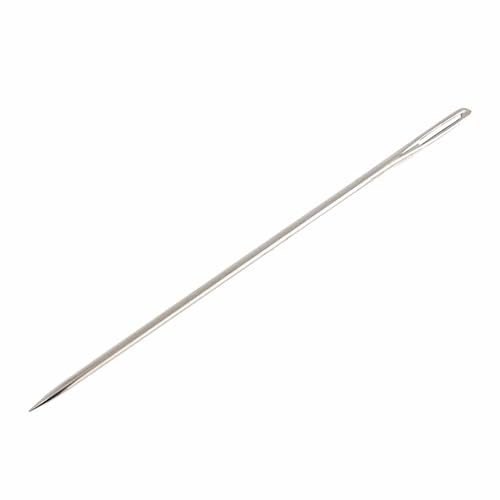
Bohin is synonymous with high-quality needlework tools, and their extra-large eye needles are a joy to use. These are crafted with a level of precision that you can feel the moment you pick them up.
The eye is specifically designed to be wide without making the entire needle bulky. This allows for excellent maneuverability, especially when you are weaving ends into intricate cables or dense ribbing where space is at a premium.
They are an investment, but the smooth finish and superior manufacturing quality prevent the needle from snagging your yarn. Bottom line: Choose these if you want a premium, snag-free experience for your heirloom projects.
ChiaoGoo Bent Tip Tapestry Needles: Best Ergonomics

ChiaoGoo is well-known for their excellent knitting needles, and their finishing needles follow suit. The bent tip is perfectly angled, acting like an extension of your finger to pick up stitches with ease.
The ergonomic design reduces hand strain, which is a major consideration if you are finishing a large project like a king-sized blanket. The aluminum construction is lightweight yet rigid, providing a great tactile experience.
These needles are particularly helpful when weaving into the "wrong side" of a project where you can’t see the needle tip clearly. The bend helps you navigate by feel alone. Bottom line: If you suffer from hand fatigue, these are your best friend.
Lykke Driftwood Finishing Needles: Best for Texture

Lykke is famous for their beautiful, smooth-finished wood, and these finishing needles are no exception. They have a unique "warm" feel that plastic and metal needles lack, making them a pleasure to hold.
The wood is treated to be incredibly smooth, so it won’t snag on delicate fibers like mohair or alpaca. They provide just enough "grip" to keep the yarn from slipping off the needle while you are navigating the back of your work.
However, because they are wood, they are thicker than metal needles to maintain their structural integrity. They are best suited for projects with a looser gauge or very chunky yarns. Bottom line: A beautiful, functional choice for those who prefer natural materials.
How to Choose the Right Needle for Heavy Yarn
When selecting a needle for chunky projects, the most critical factor is the relationship between the needle eye and your yarn’s thickness. If the eye is too small, you will struggle to thread it, leading to fraying and frustration.
You also need to consider the tip of the needle. A sharp point can pierce and split your yarn, which creates a messy, uneven finish. Always opt for a blunt or bent tip when working with bulky yarns to ensure the needle passes between the plies rather than through them.
Finally, consider the length of the needle. Longer needles are often easier to manage when you have a thick, heavy tail of yarn to weave in. Bottom line: Always match the needle size to the yarn weight; don’t force a thick yarn through a small eye.
Metal vs Plastic: Which Material Suits Your Needs?
Choosing between metal and plastic comes down to your personal preference and the type of yarn you are using. Metal needles are generally thinner and smoother, making them ideal for tight, dense knitting where space is limited.
Plastic needles, on the other hand, are lightweight and often have larger eyes. They are the superior choice for very thick, super-bulky yarns that would be impossible to fit through a standard metal needle.
Be aware that some cheap plastic needles can have "flashing" or rough seams from the manufacturing process. Always run your finger over the eye of a plastic needle to ensure it is smooth before using it on your project. Bottom line: Use metal for precision and plastic for volume.
Expert Tips for Weaving Ends Into Chunky Projects
The secret to a secure end is to weave in the direction of the stitch pattern. If you are working in stockinette, follow the "V" of the stitches. If you are working in ribbing, follow the path of the knit and purl columns.
Avoid pulling the yarn too tight, as this can distort your fabric and create a visible bump. Instead, leave a little bit of slack to allow the fabric to move naturally with the body.
For very heavy yarns, consider "splitting" the yarn. If your yarn is a 4-ply, you can untwist the end, cut two of the plies away, and weave the remaining two plies in separately to reduce bulk. Bottom line: A secure end is one that mimics the tension of the surrounding fabric.
Frequently Asked Questions About Jumbo Needles
- Can I use a tapestry needle for sewing seams? Yes, but a bent-tip needle is usually better for mattress stitch because it helps you pick up the bar between stitches more accurately.
- How do I thread a jumbo needle with fuzzy yarn? Try folding the yarn over the needle eye and pulling the loop through, or use a small piece of tape to create a stiff "needle" end on the yarn.
- Do I need a different needle for superwash wool? Superwash tends to be slippery, so ensure you weave your ends in at least 2-3 inches to prevent them from working their way out over time.
Selecting the right jumbo needle is a small detail that makes a massive difference in the longevity and appearance of your hand-knitted items. Whether you prefer the slick speed of metal or the ergonomic comfort of a bent tip, choose a tool that feels natural in your hands. Take your time with those final ends, as they are the signature of your craftsmanship. Happy knitting, and may your projects always stay secure and beautiful.