7 Best Yarn Bowls For Slick Silk Fibers To Try
Taming slick silk yarn requires the right bowl. We review seven top picks that offer the perfect weight and smooth finish to keep your fiber tangle-free.
Working with silk fibers is a luxurious experience that can quickly turn frustrating if your yarn decides to go for a walk across the floor. Because silk is inherently slick and has little memory, it requires a containment system that balances weight, surface texture, and tension control. These seven yarn bowls are curated specifically to manage the unique physics of high-twist or single-ply silk yarns. Choosing the right vessel ensures your focus stays on your stitch pattern rather than chasing a runaway cake of yarn.
Ceramic Yarn Bowl: The Best Weighted Option
Ceramic bowls offer the necessary heft to keep your project anchored, even when you are working with a fast-moving, slippery silk blend. The weight of the kiln-fired clay prevents the bowl from sliding or tipping as you pull against the tension of your working yarn.
When you are knitting a complex lace shawl with a 100% silk lace-weight yarn, the last thing you want is a lightweight bowl that skitters across your coffee table. The high-gloss glaze often found on these bowls provides a frictionless path for the yarn to travel through the spiral cutout.
However, be mindful that ceramic is prone to chipping if dropped on a hard floor. If you are a mobile knitter who likes to take projects to the park or on the train, this might be a stationary-only tool.
Handmade Wooden Bowl: Smooth Fiber Handling


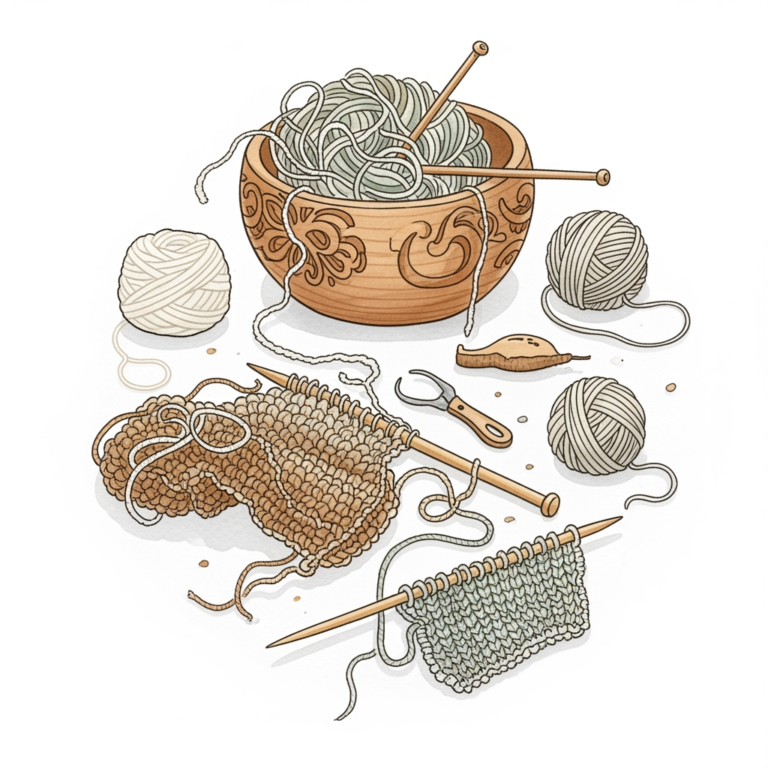
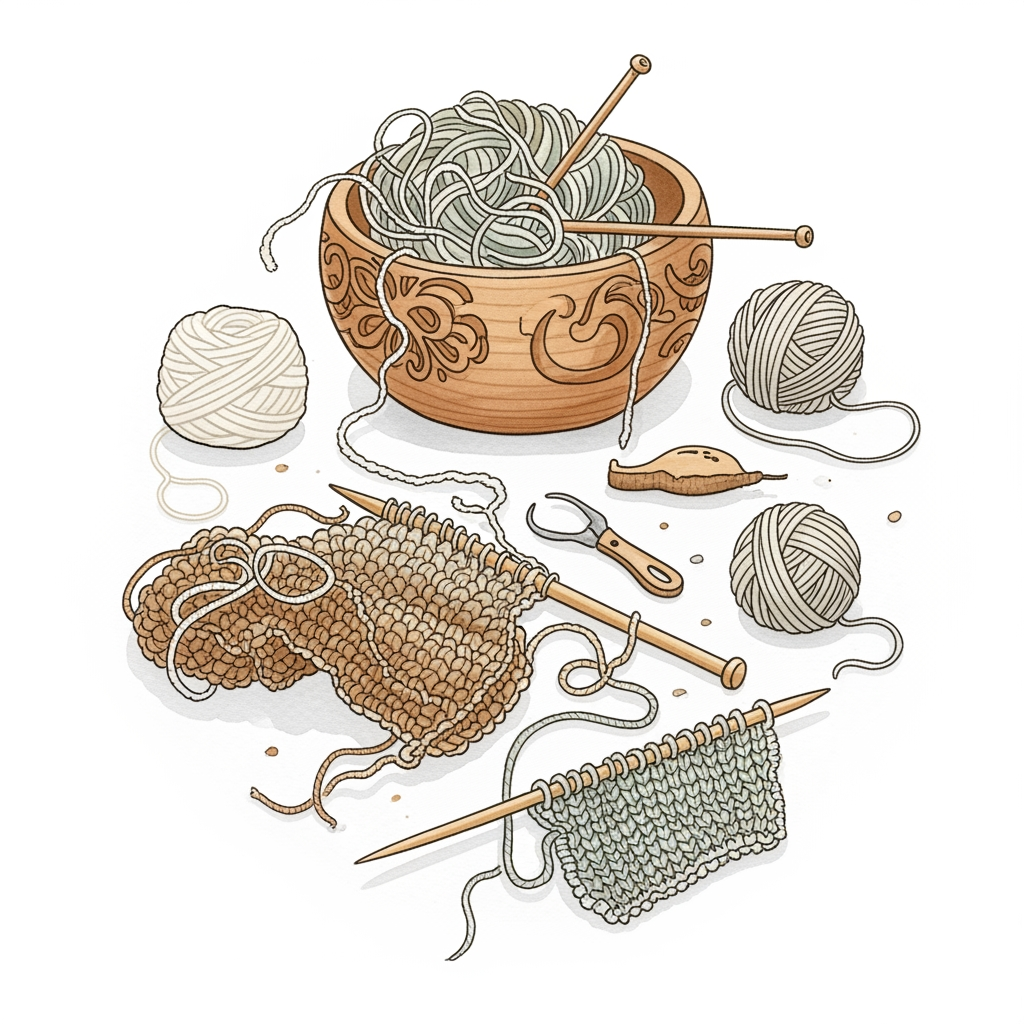
Handmade wooden bowls are the gold standard for those who appreciate the natural interaction between organic materials. Wood provides a warm, tactile experience that feels substantial without being overly heavy, and it is naturally gentle on delicate fibers.
The key here is the finish; look for bowls that have been sanded to a high grit and sealed with a non-toxic, satin-smooth wax or oil. A rough grain can catch on the fine filaments of silk, potentially causing snagging or pulling that ruins the drape of your finished fabric.
Because wood is porous, it won’t generate the same level of static electricity as some synthetic materials. This makes it an excellent choice for dry climates where silk tends to get "clingy" and difficult to manage.
Large Resin Yarn Bowl: Anti-Snag Surface

Resin bowls are a modern marvel for the knitter who demands a perfectly seamless interior. Because they are cast in molds, you won’t encounter the small pits or glaze imperfections that can occasionally snag a strand of hand-dyed silk.
These bowls are incredibly durable and often feature a wider circumference, which is ideal for holding large cakes of yarn. If you are working on a multi-strand project or a heavy silk-mohair blend, the extra room allows the yarn to unwind without tangling.
The primary trade-off is weight; resin is significantly lighter than stone or ceramic. You may find yourself needing to place it on a non-slip mat to prevent it from sliding during rhythmic knitting sessions.
Polished Bamboo Bowl: Lightweight and Safe

Bamboo is a fantastic, eco-friendly option that offers a very smooth, low-friction surface for your silk fibers. It is naturally lightweight, making it a great choice for knitters who need a portable solution that won’t add bulk to their project bag.
When selecting bamboo, ensure the spiral cut is polished and rounded off. Since bamboo is a fibrous material, any sharp edges in the cutout can act like a blade against delicate silk, causing it to fray or snap under tension.
These bowls are generally quite affordable, providing an accessible entry point for knitters new to using specialized tools. Just remember to keep them away from extreme heat sources, which can cause the wood to warp over time.
Heavy Stoneware Bowl: Stability for Silk

Stoneware is the heavyweight champion of the yarn bowl world, offering unmatched stability for those who knit with a tight, consistent tension. When you are pulling hard on your yarn to maintain gauge, this bowl will stay firmly planted on your side table.
The density of stoneware also makes it less likely to vibrate or "walk" if you are a fast knitter. This is particularly helpful when working with silk, as sudden jerks in the yarn flow can cause the strand to jump out of the bowl’s guide.
Be aware that stoneware usually has a thicker wall profile. While this adds to the aesthetic charm, it means the bowl takes up more physical space in your knitting nook.
Artisan Glass Bowl: Minimal Friction Design

Glass bowls provide a unique, ultra-smooth surface that allows silk to glide with almost zero resistance. If you struggle with yarn dragging or getting caught on the rim of your bowl, a high-quality glass vessel is the solution.
These bowls are often visually stunning, allowing you to see the beautiful sheen of your silk yarn as it unwinds. Because glass is inert, it won’t react with the fibers or oils in your yarn, keeping your materials in pristine condition.
The downside is that they are fragile and can be quite slippery on smooth surfaces. Always pair a glass bowl with a silicone coaster or a fabric base to ensure it stays exactly where you put it.
Lacquered Rosewood Bowl: The Luxury Choice

Lacquered rosewood is the pinnacle of functional art for the dedicated knitter. The deep, rich finish is not only beautiful but also provides a slick, glass-like surface that is perfect for the most snag-prone silk fibers.
The lacquer creates a protective barrier, ensuring the wood remains smooth for a lifetime of use. It is a significant investment, but for those who spend hundreds of hours on silk projects, the tactile pleasure and performance are well worth the cost.
Because these are often handcrafted, check the spiral cutout for symmetry and smoothness. A well-made rosewood bowl will feel like an extension of your hands, making your knitting process feel effortless and elegant.
Why Silk Fibers Require Specialized Bowls
Silk is a continuous filament fiber, meaning it lacks the "crimp" and elasticity of wool. When you pull a strand of silk from a ball, it has a tendency to slide off in clumps rather than unwinding one rotation at a time.
A standard bowl without a dedicated guide will often result in the yarn ball tumbling out or catching on itself. By using a bowl with a spiral or hook guide, you force the silk to unwind at a controlled, steady pace.
This containment is vital for maintaining consistent tension, which is the secret to a professional-looking finished garment. Without this control, your stitches will vary in size, leading to an uneven fabric that blocks poorly.
Preventing Static Cling in Natural Fibers
Silk is notoriously prone to static electricity, especially in low-humidity environments or during the winter months. When your yarn starts clinging to the sides of the bowl or to your needles, it creates unnecessary drag that ruins your rhythm.
To combat this, avoid plastic or synthetic bowls if you live in a dry climate. Wood and ceramic are much better at dissipating static charges, keeping your yarn flowing freely through the guide.
If you find your silk is still acting up, a quick wipe of the bowl with a slightly damp cloth can help neutralize the charge. Alternatively, keeping a small humidifier in your knitting area will do wonders for both your yarn and your skin.
Maintaining Your Yarn Bowl for Longevity
Treat your yarn bowl like a fine tool, not just a storage bin. For wooden bowls, a light application of food-grade mineral oil once or twice a year will keep the wood hydrated and prevent it from becoming brittle or rough.
For ceramic and glass, a simple wipe-down with a soft cloth is usually enough to remove any dust or fiber debris. Avoid using harsh chemicals that could damage the finish and potentially transfer onto your expensive silk yarn.
Finally, always store your bowl in a safe place when not in use. A yarn bowl is a long-term companion for your knitting journey, and with proper care, it will serve you through countless projects and fiber types.
Finding the right yarn bowl for your silk projects is a balance of weight, surface texture, and personal aesthetic. Whether you choose the heavy stability of stoneware or the frictionless glide of polished wood, the goal is to make your knitting process as seamless as the silk itself. Invest in a tool that respects the delicacy of your fibers, and you will notice an immediate improvement in your tension and stitch quality. Happy knitting, and may your yarn always unwind with grace.