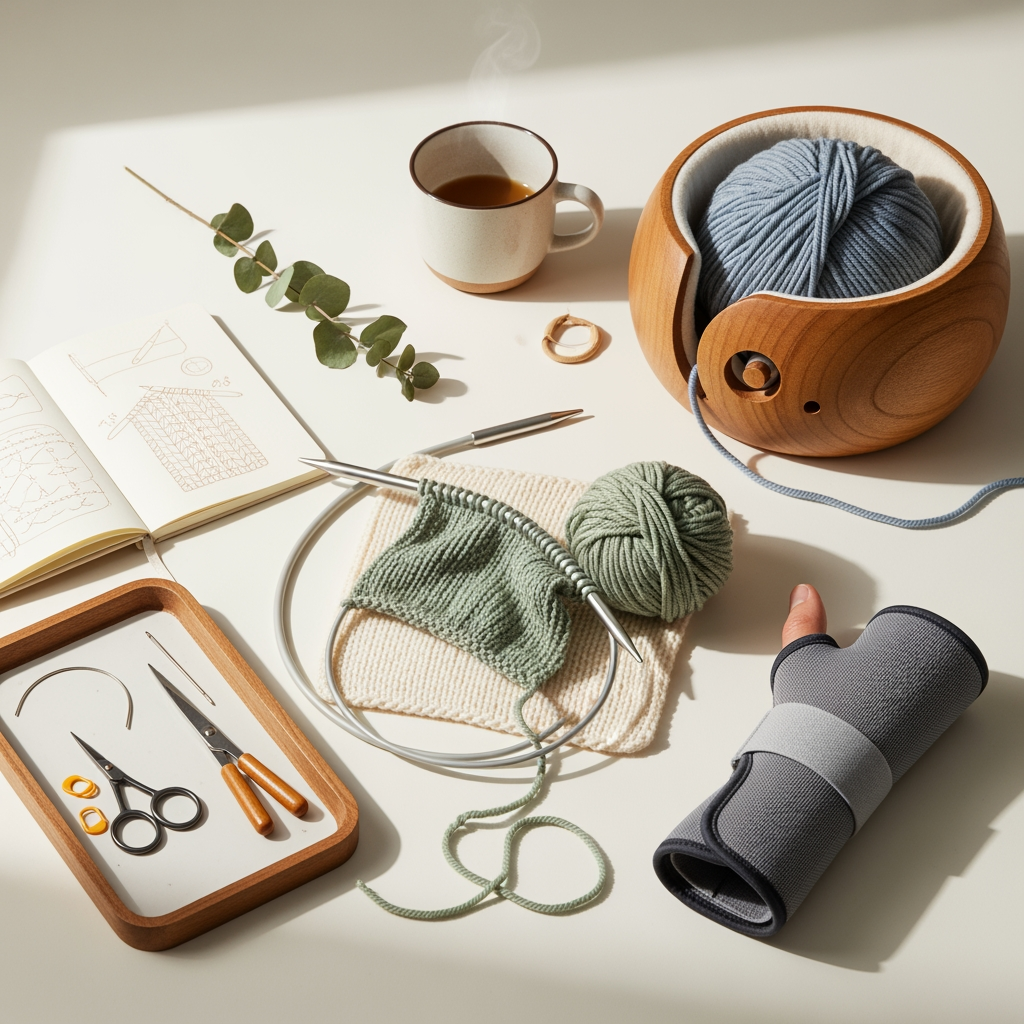
7 Best Ergonomic Grips For Sewing Tools To Use
Reduce hand strain while crafting. Explore our top 7 ergonomic grips for sewing tools, designed to enhance comfort, improve precision, and prevent fatigue.
Sewing and knitting for hours on end can take a toll on your joints, leading to stiffness that cuts your creative time short. Investing in ergonomic tools isn’t just about luxury; it is a vital strategy for maintaining your physical longevity as a maker. By choosing the right grips, you can significantly reduce the repetitive strain that often accompanies intricate needlework. These seven tools represent the best options for keeping your hands comfortable and pain-free during your next big project.
Clover Amour Crochet Hooks: Best Overall Comfort


These hooks are the gold standard for a reason, featuring a signature elastomer handle that feels soft and slightly tacky to the touch. The material provides just enough friction to prevent the tool from slipping out of your hand when you are working with slick, slippery fibers like silk or bamboo.
The shape of the handle is specifically designed to fit the natural curve of your palm, which helps prevent the "death grip" many beginners develop. When you are working on a complex lace shawl that requires hours of focus, this ergonomic shape keeps your hand muscles relaxed.
The trade-off here is the handle thickness, which might feel bulky if you prefer a traditional, thin steel hook. However, for those dealing with arthritis or general hand fatigue, that extra surface area is a game-changer.
Fiskars Softgrip Scissors: Best Ergonomic Handle

Scissors are the most used tool in any sewing kit, and the handle design makes a massive difference during long cutting sessions. The Softgrip handles are cushioned, which prevents the hard plastic edges from digging into your fingers while you are trimming yarn ends or cutting fabric.
The spring-action design is another highlight, as it gently pushes the blades open after every cut. This simple mechanical advantage eliminates the need to manually open the blades, effectively cutting your hand effort in half.
If you have smaller hands, ensure you choose the specific size designed for your grip. A tool that is too large can force your fingers into an awkward splay, which eventually leads to cramping.
Prym Ergonomic Thimble: Best for Needle Sewing

If you have ever struggled with a metal thimble slipping off your finger, this is the solution you need. The Prym version is made from a soft, flexible plastic that conforms to your finger shape rather than forcing your finger to adapt to the tool.
The ventilation holes are a thoughtful addition, preventing your skin from becoming sweaty during long sessions of hand-sewing or quilting. It feels more like a second skin than a clunky piece of hardware.
While it lacks the rigid, puncture-proof surface of traditional steel thimbles, it is far more comfortable for delicate work. It provides enough protection for standard sewing without the bulk that often ruins your tactile sensitivity.
Tulip Etimo Red Hooks: Best Precision Grip Tool

These hooks are engineered for makers who prioritize precision and smooth movement. The handle has a slightly firmer feel than the Clover Amours, which provides excellent feedback when you are working with fine-gauge yarn or dense, tight stitches.
The finish on the hook itself is exceptionally smooth, allowing the yarn to glide effortlessly. This reduces the amount of force you need to pull your yarn through, which is essential when working with delicate or splitty fibers.
The price point is higher, but the durability is unmatched. If you are a dedicated maker who spends every evening with a project in hand, the cost is easily justified by the reduction in wrist strain.
Dritz Comfort Grip Seam Ripper: Best Hand Relief

Seam ripping is the most tedious part of sewing, and it is usually when we are most frustrated and likely to use too much force. The oversized, rubberized handle allows you to apply pressure with your whole hand rather than just your fingertips.
The ergonomic shape helps you maintain a better angle, which prevents the tool from slipping and damaging your fabric. It is a simple tool, but the design prevents the sharp, stabbing motions that tire out your thumb and index finger.
Always keep the cap on when not in use, as the rubberized grip can attract lint and dust over time. Keeping it clean ensures the grip remains effective and comfortable for years.
Bohin Ergonomic Needle Case: Best Joint Support

While this is technically a storage tool, the ease of access it provides is a major ergonomic benefit. Traditional needle cases can be difficult to open, especially if you have limited dexterity or grip strength in your fingers.
The Bohin case is designed for easy, one-handed operation. Being able to access your needles without fumbling with tiny lids or sliding mechanisms reduces the frustration that often leads to hand tension.
It is a small detail, but in a long sewing session, removing these tiny, repetitive hurdles keeps your hands relaxed. Focus on the tools that reduce the "micro-strains" throughout your day.
Singer ProSeries Ergonomic Snips: Best for Hands
These snips are perfect for those moments when you need quick, precise cuts without picking up full-sized shears. The handle is designed to be gripped between your thumb and forefinger, which is a much more natural position for detail work.
They are lightweight and well-balanced, which prevents your hand from tiring out during heavy trimming sessions. They are particularly useful when you are finishing a project and need to snip dozens of yarn ends.
Because they are small, they can be easy to misplace, so keep them on a lanyard or in a dedicated spot on your sewing table. Using the right tool for the right task is the first step in avoiding repetitive strain.
Why Ergonomic Tools Matter for Fiber Artists
- Longevity: Ergonomic tools extend your "career" as a maker by preserving your joints.
- Precision: Less pain means you can maintain consistent tension and stitch quality.
- Efficiency: Tools that work with your hand mechanics allow you to work faster and longer.
- Reduced Inflammation: Proper grip reduces the risk of developing conditions like carpal tunnel or tendonitis.
How to Select the Right Grip for Your Hand Size
Choosing the right grip is highly personal and depends on the size of your hand and how you hold your tools. If you use a "pencil grip" for your hooks or needles, look for tools with a tapered, slim handle. If you use a "knife grip," you will likely find more comfort in a thicker, ergonomic handle that fills your palm. Always test a tool’s weight; a tool that is too heavy will cause fatigue just as quickly as one that is poorly shaped.
Reducing Hand Strain During Long Sewing Sessions
Even with the best tools, you must listen to your body. Take a five-minute break every hour to stretch your fingers, wrists, and shoulders. Incorporate variety into your projects; if you have been working on a complex lace pattern that requires tight tension, switch to a more relaxed, stockinette-stitch project for a while. Remember, the goal is to enjoy the process, not to push your body to the point of pain.
Investing in your physical health is just as important as choosing the perfect yarn for your next project. By integrating these ergonomic tools into your workspace, you are setting yourself up for years of comfortable, creative work. Listen to your hands, prioritize comfort over tradition, and you will find that your sewing and knitting sessions become much more enjoyable. Keep making, keep creating, and take care of those hands.