7 Best Yarn Labels For Fiber Identification To Try
Navigate fiber identification with ease. Discover the 7 best yarn labels to track material content, weight, and care instructions for every knitting project.
Selecting the right yarn is the single most important decision you make before your needles ever touch the fiber. Every skein tells a story through its twist, ply, and raw material, dictating how your finished garment will drape, wear, and age. Understanding these labels isn’t just about reading a tag; it is about predicting how your project will behave after fifty hours of work. These seven yarns represent the gold standard for understanding how specific fibers influence your knitting experience.
Knit Picks Wool of the Andes: Best Value Choice


When you are planning a large-scale project like a cabled sweater, the cost of high-end wool can be prohibitive. Knit Picks Wool of the Andes is the industry benchmark for a workhorse Peruvian Highland wool that offers incredible stitch definition without the luxury price tag.
Because it is a slightly rustic, non-superwash wool, it holds cables and textured stitches with remarkable clarity. It has a bit of "grab" on the needles, which is excellent for beginners who are still mastering their tension and don’t want stitches slipping off their needles mid-row.
The trade-off here is softness; it is not a next-to-skin yarn for those with sensitive skin. However, for outerwear, hats, or blankets, its durability is unmatched at this price point. Always swatch this yarn and wash it, as the wool will bloom and soften significantly after a soak.
Malabrigo Rios: Best Hand-Dyed Merino Option
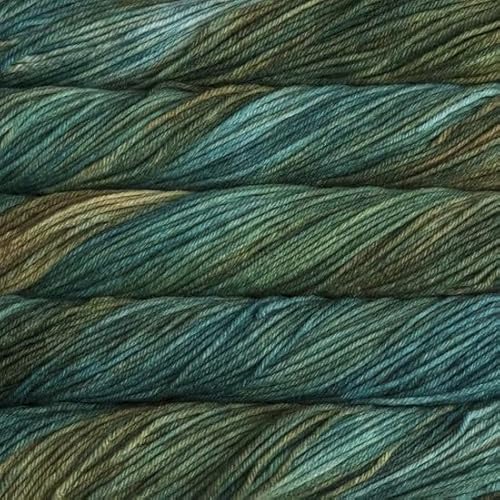
If you want the softness of merino but need the practicality of a machine-washable fiber, Malabrigo Rios is the gold standard. It is a four-ply, worsted-weight yarn that features the stunning, kettle-dyed colorways for which the brand is famous.

The multi-ply construction provides a round, bouncy stitch that is perfect for hats and cowls. Because it is hand-dyed, no two skeins are identical; you must alternate skeins while knitting to avoid color pooling or sudden shifts in the fabric.
Be aware that even superwash merino can grow significantly when wet. If you are knitting a sweater, you must block your swatch to its final dimensions to ensure you don’t end up with a garment that is two sizes too large after the first wash.
Cascade 220 Superwash: Best Reliable Workhorse

There is a reason you find Cascade 220 in almost every local yarn shop across the country. It is the definition of consistent, reliable, and versatile, making it the perfect choice for gift knitting where you need a yarn that won’t shrink or felt in the recipient’s laundry.
The superwash treatment removes the scales from the wool fiber, which prevents felting but also makes the yarn slightly slicker. If you find your stitches sliding off your needles too easily, try switching to a bamboo or wooden needle to add a bit of friction.
Because it is a standard worsted weight, it is the perfect "canvas" for learning new techniques like brioche or stranded colorwork. It is predictable, easy to work with, and holds up to years of heavy wear without pilling excessively.
Rowan Felted Tweed: Best Texture and Blend
Rowan Felted Tweed is a unique blend of wool, alpaca, and viscose that creates a fabric with a distinct, matte, and slightly fuzzy aesthetic. It is a masterclass in texture, making it the preferred choice for colorwork designers who want a sophisticated, painterly look.
The alpaca content adds a halo that softens the overall appearance of your stitches, effectively blurring the lines between colors in stranded knitting. This makes it much more forgiving than a crisp, high-twist wool if your tension is slightly uneven.
Because of the delicate balance of fibers, this yarn does not have the same elasticity as pure wool. When knitting garments, be mindful of the weight of the fabric, as the viscose content can cause the garment to grow slightly over time if not supported by a well-structured stitch pattern.
Brooklyn Tweed Shelter: Best American Wool
Shelter is a woolen-spun yarn, meaning the fibers are carded rather than combed, trapping more air inside the yarn. This results in a remarkably lightweight, airy fabric that offers incredible warmth without the bulk of traditional worsted-spun yarns.
Working with woolen-spun yarn requires a gentle touch, as it is more prone to snapping than its worsted-spun counterparts. If you are a "tight" knitter, be cautious, as the delicate structure of the yarn can break if you tug too hard on your working yarn.
The trade-off for this lightness is a higher tendency to pill. This is a yarn for heirloom pieces that you intend to care for by hand; it is not the right choice for a high-traffic, everyday garment that you plan to throw in the wash.
Shibui Knits Nest: Best Luxury Fiber Blend
When you want to elevate a project, Shibui Knits Nest offers a sophisticated blend of wool and alpaca that feels like silk against the skin. It is designed to be lightweight yet substantial, providing a beautiful, fluid drape that is perfect for elegant shawls and lightweight cardigans.
The yarn has a subtle sheen and a refined finish that highlights intricate lace patterns beautifully. Because it is a luxury blend, it is best suited for projects that will be worn over other layers rather than as a rugged outer shell.
Take care when winding this yarn; it is delicate and can be prone to tangling if handled roughly. Always use a swift and ball winder, and treat the finished object with the care you would give to any high-end fiber.
Noro Kureyon: Best Unique Self-Striping Wool

Noro Kureyon is a cult classic for a reason: the dramatic, long-repeat color changes are unlike anything else on the market. It is a thick-and-thin, rustic wool that celebrates the raw beauty of the fiber, complete with occasional bits of vegetable matter that remind you of its natural origin.
The main challenge with Kureyon is the variation in yarn diameter, which can affect your gauge mid-row. You must embrace the irregularities as part of the design, rather than fighting them to achieve a perfectly uniform fabric.
Because it is a single-ply, rustic wool, it is quite hardy and holds its shape well. It is an excellent choice for textured stitches or simple garter stitch projects where the color transitions can take center stage without being interrupted by complex cables.
How to Decipher Yarn Label Fiber Content Icons
- Wool/Animal Fibers: Look for symbols indicating sheep, alpaca, or goat. These fibers provide warmth and elasticity but often require hand washing.
- Plant Fibers: Cotton, linen, and bamboo are represented by plant-based icons. They are durable and cool to the touch but lack the "memory" of wool, meaning they can stretch out and stay stretched.
- Synthetic Fibers: Icons for nylon or acrylic indicate added strength or machine-washability. Nylon is essential for socks to prevent the heels from wearing through.
- Care Symbols: Always look for the wash basin icon. A "hand wash only" symbol is a warning that the item will felt or lose its structure if put in a machine.
Why Fiber Identification Matters for Gauge
Gauge is not just about the number of stitches per inch; it is about the interaction between your needles and the fiber’s elasticity. A wool yarn will "spring back" after being stretched, which helps maintain a consistent gauge even if your tension wavers slightly.
In contrast, cotton or silk has zero elasticity. If you knit a sweater with a non-elastic fiber, your gauge will likely loosen as the weight of the garment pulls on the fabric. You may need to drop down a needle size or choose a stitch pattern that creates a naturally tighter fabric to compensate.
Always remember that fiber content dictates how a yarn "blooms" after washing. A wool-heavy yarn will expand and fill in the gaps between stitches, while a synthetic or plant-based yarn will remain exactly as it was when it came off the needles.
Tips for Storing Yarn to Preserve Fiber Health
- Keep it breathable: Store your yarn in cotton bags or acid-free boxes rather than airtight plastic bins, which can trap moisture and lead to mildew.
- Pest prevention: Use cedar blocks or lavender sachets to deter moths, especially with high-quality wools and luxury blends.
- Avoid sunlight: Direct UV exposure will fade the dyes in your yarn and can make plant fibers brittle over time.
- Label everything: Even if you think you will remember the dye lot, you won’t; keep the original labels tucked inside your yarn cakes to ensure you can match colors if you need more for a future project.
Mastering the art of reading yarn labels transforms you from a casual crafter into a thoughtful maker who understands the structural integrity of every stitch. By choosing the right fiber for your specific project, you ensure that your hard work results in a lasting, beautiful piece of art. Always prioritize your swatch results over the label’s suggested gauge, and never be afraid to experiment with different fibers to see how they behave on your needles. Happy knitting, and may your tension always be even and your yarn supply never run dry.