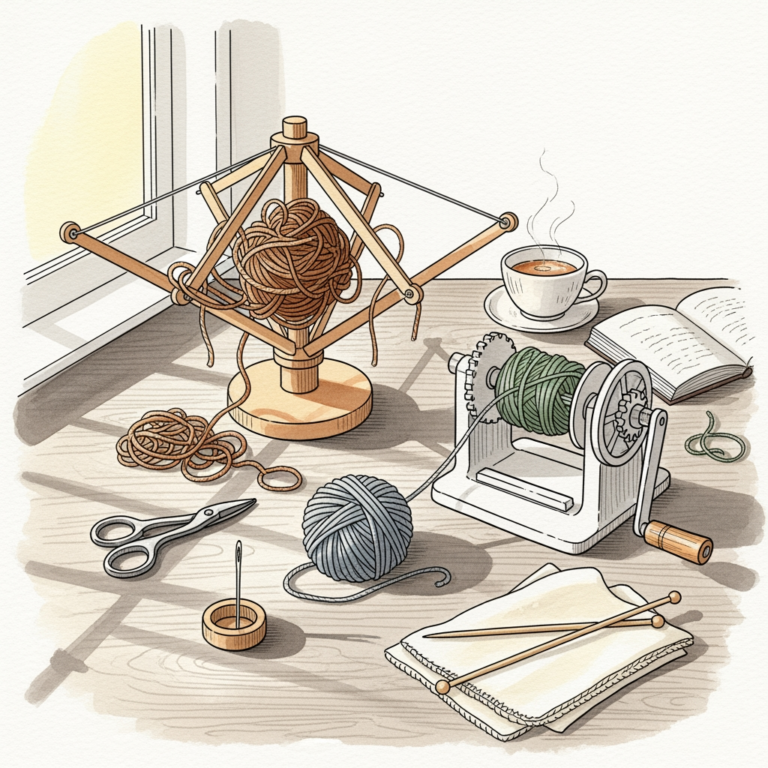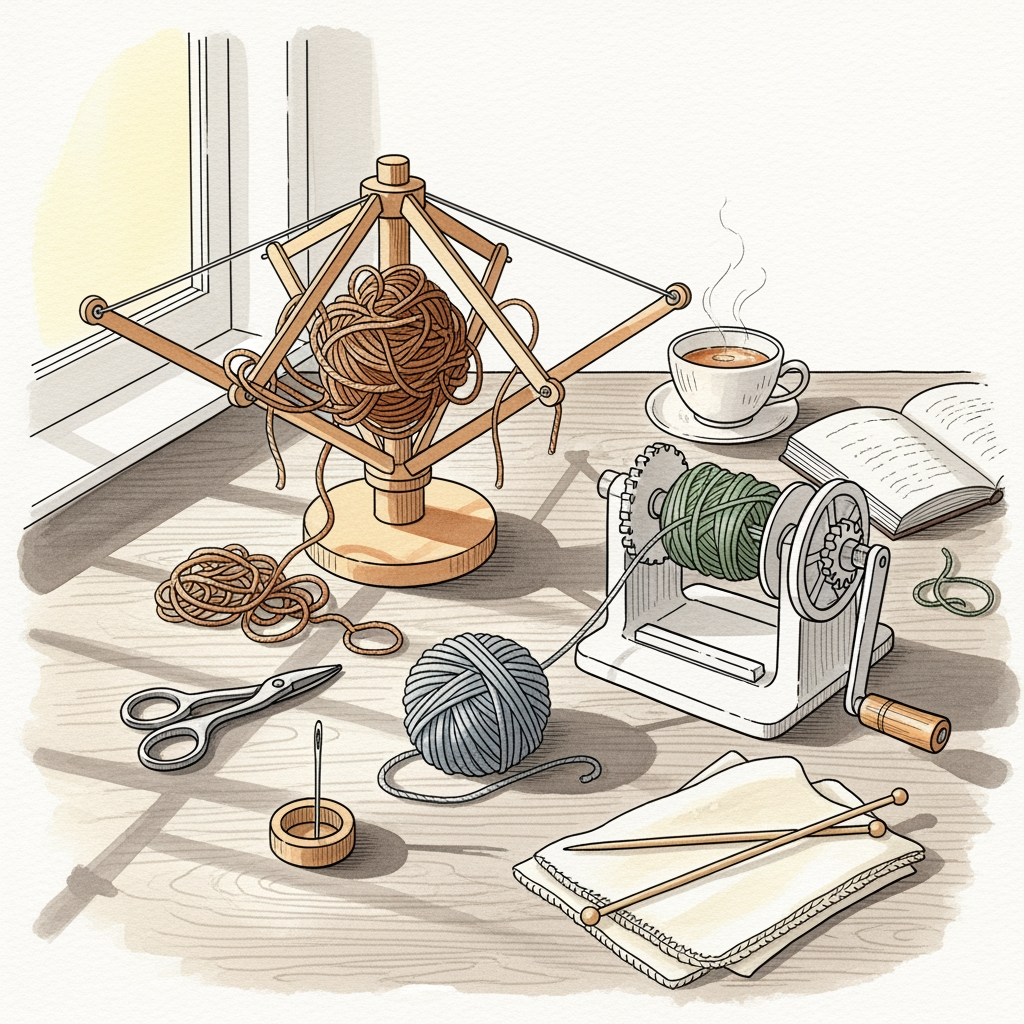
6 Best Umbrella Swifts For Heavy Wool Skeins
Discover the 6 best umbrella swifts for heavy wool. Our guide reviews durable, stable models designed to handle bulky skeins without tangling or slippage.
Wrangling a heavy, hand-dyed wool skein without a proper swift is a recipe for a tangled nightmare that can ruin your knitting flow before you even cast on. Whether you are working with a rustic, sticky Highland wool or a heavy, multi-ply superwash, the right tool makes the difference between a relaxing winding session and a frustrated hour of detangling. I have spent two decades watching knitters struggle with subpar equipment, and I am here to help you choose a swift that actually handles the weight and tension of your favorite fibers. Investing in a reliable swift is just as important as choosing the right needles for your gauge.
Stanwood Needlecraft Large Metal Umbrella Swift


When you are dealing with a massive, heavy skein of bulky wool, you need a tool that doesn’t buckle under the pressure. The Stanwood Needlecraft Large Metal Umbrella Swift is the gold standard for stability because its all-metal construction prevents the warping often seen in cheaper wooden models.
This swift is particularly excellent for those who frequently wind heavy, multi-ply yarns that have a tendency to "grab" during the winding process. Because the metal arms are smooth and rigid, the yarn glides off the swift without catching on splinters or uneven joints.
If you find yourself winding large 200-gram skeins of aran-weight wool, the weight of the metal base keeps the swift firmly planted on your table. It is an investment piece, but it eliminates the constant "re-tightening" of clamps that plagues lighter models.
Amish Style Wooden Swift by Nancy’s Knit Knacks

The Amish-style swift operates on a completely different principle than the umbrella style, sitting horizontally on your table rather than spinning vertically. Nancy’s Knit Knacks produces a version that is exceptionally smooth, which is critical when working with delicate but heavy wools that might pill if dragged against rough wood.
Because this design doesn’t rely on a central umbrella mechanism, there is significantly less tension placed on the yarn as it travels to your ball winder. This is a game-changer for hand-spun yarns or loosely twisted wools that might stretch out of shape if pulled too tightly.
The tradeoff here is space; you need a large, dedicated surface area to set this up effectively. However, for the knitter who wants to preserve the loft and bounce of a premium wool, this is the superior choice.
Strauch Petite Wood Umbrella Swift for Skeins

Don’t let the "Petite" in the name fool you; this is a precision-engineered tool designed for the serious fiber artist. The Strauch swift is renowned for its incredible balance, which allows it to spin with almost zero resistance.
When you are winding heavy wool, friction is your enemy, as it can cause the yarn to stretch or the ball winder to stall. The Strauch handles this by utilizing high-quality wooden components that are sanded to a glass-like finish, ensuring the yarn moves effortlessly regardless of the skein’s weight.
It is a compact, elegant solution for knitters who don’t have a massive craft room but still demand professional results. The bottom line is that you are paying for the engineering quality that ensures your yarn remains in pristine condition.
KnitPicks Yarn Swift: Best Value for Beginners
If you are just starting your journey into buying yarn in hanks rather than balls, the KnitPicks swift is the most accessible entry point. It is lightweight, easy to store, and perfectly adequate for standard-weight wools.
While it lacks the heavy-duty metal construction of more expensive models, it handles the average project skein with ease. If you are mostly knitting with worsted-weight superwash wool, you will find this swift more than capable of keeping your yarn organized.
Just be mindful that it is made of lighter materials, so it may struggle if you try to force a very large, heavy, or tangled skein onto it. It is a fantastic "starter" tool that allows you to spend your budget on more yarn rather than expensive hardware.
Lacis Wooden Umbrella Swift for Heavy Yarns

Lacis has a long-standing reputation for producing tools that feel like heirloom pieces, and their wooden umbrella swift is no exception. It is built with a sturdy frame that stands up well to the rotational force required to wind heavy, thick wool skeins.
The wood is polished to a high sheen, which is essential to prevent snagging on wool fibers that have a high "grab" factor. Unlike some cheaper wooden swifts, the joints on the Lacis model are tight and precise, meaning it won’t wobble or collapse mid-wind.
This is a great middle-ground option for those who prefer the aesthetic of wood but need the functional strength of a more robust tool. It requires a bit of maintenance—an occasional wipe with a dry cloth—to keep it running smoothly for years.
Ashford Tabletop Swift: Best for Large Skeins
Ashford is a name synonymous with spinning and weaving, and their tabletop swift reflects that deep understanding of fiber mechanics. It is designed to accommodate very large skeins, making it a favorite for those who buy their wool in large, custom-dyed quantities.
The design is incredibly robust, featuring a heavy-duty clamp that ensures the swift stays put even when you are winding at a high speed. This stability is vital when you are working with heavy wool that has a lot of momentum once the swift starts spinning.
If you are a prolific knitter who goes through yarn quickly, this is the workhorse you want on your table. It is built to take a beating and keep on spinning, making it a true investment in your craft.
How to Properly Set Up Your New Umbrella Swift
Setting up your swift correctly is the first step in preventing the "tangle catastrophe." Start by ensuring the base is clamped firmly to a level surface, as any tilt will cause the yarn to slide off the arms during the winding process.
Once secured, open the umbrella arms just enough to hold the skein snugly; don’t stretch the yarn to its breaking point. If the skein is loose, the yarn will sag and create loops that inevitably lead to knots.
Always check that the yarn is centered on the swift, and ensure the swift is positioned at a height that allows the yarn to travel horizontally to your winder. Proper alignment reduces tension and keeps your ball winder running smoothly.
Why Heavy Wool Needs a Sturdy Metal Base Swift
Heavy wool skeins possess significant mass, which creates a surprising amount of inertia when you begin winding. A lightweight plastic or flimsy wooden swift will often wobble or lift off the table, which leads to uneven tension in your wound ball.
A sturdy metal base provides the necessary counterweight to keep the swift stationary, even when you are winding thick, bulky yarns. This stability is not just about convenience; it is about the health of your yarn.
When a swift wobbles, the yarn tension fluctuates wildly, which can lead to "stretched" sections in your yarn. By using a metal base, you ensure the yarn is wound with consistent tension, which is crucial for maintaining an even gauge in your finished knitting.
Essential Tips for Winding Without Yarn Tangles
The secret to tangle-free winding is to remove the yarn ties from your skein only after it is securely on the swift. If you remove the ties while the skein is loose, you are practically guaranteeing a bird’s nest of knots.
Always wind at a slow, steady pace rather than trying to rush the process. If you feel resistance, stop immediately and check for a snag on the swift or a twist in the yarn; forcing it will only make the tangle tighter.
If you are dealing with a particularly "sticky" wool, such as a high-twist singles, consider winding by hand if the swift tension feels too high. Sometimes, the mechanical advantage of a swift is actually too much for delicate, high-twist fibers.
Troubleshooting Common Swift and Winder Issues
If your yarn keeps slipping off the arms, your umbrella is likely opened too wide or the skein is too loose. Try adjusting the height of the swift or moving it further away from your ball winder to create a better angle of approach.
If you hear a squeaking sound, a small drop of wood wax or a light lubricant on the central pivot point usually solves the problem. Never use heavy oils that could migrate onto your precious wool.
Finally, if your ball winder is struggling, check that the yarn isn’t getting caught on the base of the winder itself. Often, the issue isn’t the swift, but the path the yarn takes between the two tools.
Choosing the right umbrella swift is about balancing the weight of your favorite yarns with the space and budget you have available. A sturdy metal swift is a permanent solution for the heavy-wool lover, while a wooden model offers a beautiful, tactile experience for those who appreciate traditional tools. Remember that the goal is always to keep your yarn tension consistent and your fiber integrity intact. Now that your tools are sorted, you can get back to the joy of knitting with a perfectly wound cake of wool.