6 Best Wash-away Stabilizers for Delicate Projects
Discover the 6 best wash-away stabilizers for delicate fabrics. Learn how these essential tools ensure precision and dissolve cleanly for professional results.
Achieving professional results on delicate fiber projects often requires a hidden backbone to support your stitches during construction. Wash-away stabilizers act as a temporary scaffold, providing the necessary tension to keep intricate work from distorting or tunneling. Understanding which stabilizer to choose is the difference between a perfectly crisp lace edge and a puckered, uneven nightmare. This guide breaks down the best options to ensure your heirloom-quality pieces remain pristine from the needles to the final soak.
Sulky Solvy: The Best Water-Soluble Stabilizer


Sulky Solvy is the gold standard for many fiber artists because of its incredible versatility and reliable dissolution. It feels like a thin plastic film, which makes it perfect for stabilizing delicate areas where you don’t want to add bulk.
If you are working on a fine-gauge silk or a lightweight bamboo blend, this stabilizer provides just enough structural integrity to prevent your needle from pulling the fabric. It holds your stitches in place while you work, then vanishes completely when exposed to water.
The trade-off is its thinness; it isn’t designed for heavy-duty reinforcement. Use it for surface embellishments or light embroidery on your knits, but look elsewhere if you need to support structural weight.
Pellon 541 Wash-Away: Best for Heavy Fabrics

When your project involves heavier yarns, like a rustic wool or a dense cotton cable, Pellon 541 offers the extra heft you need. It is a non-woven, fabric-like stabilizer that stands up to the tension of more substantial fibers.
Unlike the film-based options, this stabilizer feels more like a light interfacing. It provides a stable base for your needles to pass through without the "stretching" effect that can occur with thinner materials.
Because it is thicker, it requires a thorough rinse to ensure no residue remains hidden within the fibers. For projects like heavy wool sweaters or dense tapestry work, this is the reliable backbone you want.
Vilene Solufleece: Ideal for Delicate Embroidery

Vilene Solufleece is a unique hybrid that acts like a fabric but dissolves perfectly in water. It is particularly brilliant for delicate embroidery on fine-gauge knits where you need to prevent the yarn from slipping.
The texture is soft and fuzzy, which helps it "grip" the yarn slightly better than a slick film would. This makes it a top choice for beginners who might be nervous about their stitches shifting while they work.
It is particularly forgiving with high-twist yarns that tend to jump around. Just be aware that it can leave a slight "stiff" feeling until it is fully submerged in a warm water bath.
Dritz Wash-Away Wonder Tape: Best for Precision
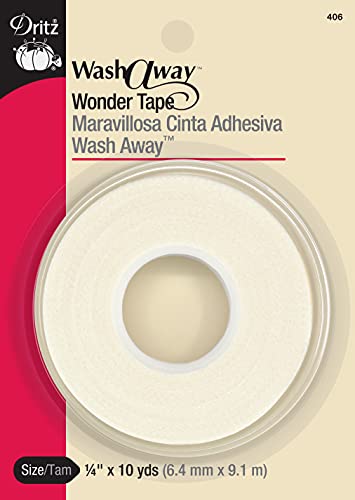
Sometimes you don’t need a full sheet of stabilizer; you only need to hold a specific seam or hem in place. Dritz Wash-Away Wonder Tape is a double-sided adhesive that behaves like a temporary basting stitch.
This is a lifesaver when you are trying to align delicate lace borders or attach a knitted applique to a finished garment. It keeps everything perfectly aligned while you work, eliminating the need for bulky pins that can snag your yarn.
The beauty of this tape is that it eliminates the guesswork of pinning. It holds tight, allows for precise placement, and washes away during the first blocking session.
Madeira Avalon Film: Best for Sheer Lace Work

Madeira Avalon Film is the go-to for the most delicate, sheer lace projects where even the slightest stabilizer residue would be visible. It is incredibly transparent and melts away at lower temperatures than other films.
If you are working on fine mohair or gossamer-thin silk lace, this is your best friend. It provides the necessary support for your stitches to remain open and airy without weighing down the fiber.
Because it is so sensitive, keep it away from steam or high humidity before you are ready to remove it. It is a high-performance tool for advanced makers who need invisible support.
Badgemaster Water-Soluble: Best for Heavy Stays

Badgemaster is the heavy-duty option for when you need maximum support for complex, multi-layered embroidery or dense structural work. It is much stiffer than other film stabilizers, providing a rigid surface to work on.
This is perfect for when you are knitting or embroidering on loosely constructed fabrics that tend to sag under the weight of the work. It provides a "hoop-like" tension that is hard to replicate with lighter materials.
While it is excellent for stability, it does require a bit more patience during the washing process. Ensure you use plenty of water to fully remove the stiffening agent, especially if you are working with dark-colored fibers that might show residue.
How to Choose the Right Stabilizer for Your Fiber
Choosing the right stabilizer is a balancing act between the weight of your yarn and the complexity of your stitches. Start by considering the fiber content: natural fibers like wool and cotton handle moisture well, while synthetic blends may require a gentler rinse.
- Fine/Sheer Yarns: Use film-based stabilizers like Sulky Solvy or Madeira Avalon.
- Medium/Heavy Yarns: Opt for fabric-style stabilizers like Pellon 541.
- Intricate/Complex Designs: Choose a stiffer option like Badgemaster for maximum control.
Always test a small swatch first if you are unsure how your yarn will react to the stabilizer. A quick wash test on a scrap piece will tell you everything you need to know about how the product dissolves.
Proper Techniques for Dissolving Your Stabilizer
The secret to a clean finish is the water temperature and the agitation level. Most wash-away stabilizers require warm water to fully liquefy, but check your yarn’s care label first to ensure you aren’t accidentally felting your project.
Submerge the piece in a basin of warm water and let it soak for at least ten to fifteen minutes. Gently agitate the water with your hands to help the stabilizer break down and flow away from the fibers.
If you are using a thicker stabilizer, you may need to rinse the piece twice. Always finish with a cool water rinse to set the fibers and ensure no chemical residue remains.
Preventing Puckering on Delicate Knit Projects
Puckering usually happens when the stabilizer is too stiff for the yarn or when your tension is inconsistent. If you notice your knitting pulling inward, you are likely using a stabilizer that is too heavy or you are pulling the yarn too tightly while working.
To prevent this, ensure your fabric is laying flat against the stabilizer without being stretched. Use a light touch when embroidering or reinforcing, and always let the stabilizer do the work of holding the fabric flat.
If you still see puckering, try switching to a thinner film stabilizer or using a smaller piece that only covers the area you are working on. Less is often more when it comes to stabilization.
Troubleshooting Common Wash-Away Stabilizer Issues
The most common issue is "gummy" residue left on the yarn after washing. This usually happens because the water wasn’t warm enough or the soak time was too short.
If you find residue, simply re-soak the project in warm water and gently rub the area with your fingers. Another issue is the stabilizer tearing before the work is finished; this usually means you need to use a double layer or switch to a sturdier, fabric-based option.
Remember that stabilizers are tools, not permanent parts of your project. If something feels wrong, don’t be afraid to wash it out and try a different weight or type on a new swatch.
Mastering the use of wash-away stabilizers opens up a world of possibilities for your delicate knitting and embroidery projects. By matching the right stabilizer to your specific yarn weight and project goals, you can ensure your work remains structural, crisp, and beautiful. Don’t be afraid to experiment with these tools on scrap yarn before committing to your main project. With the right support, your intricate designs will truly shine without the worry of distortion.