7 Best Project Progress Keepers For Tracking Rows
Stay organized with our top 7 project progress keepers. Discover the best tools for tracking rows efficiently and streamlining your workflow with ease today.
Keeping an accurate row count is the difference between a perfectly symmetrical sweater and a project that ends in a frogged mess. Whether you are working through complex cable repeats or simple stockinette, losing your place is a rite of passage every knitter eventually faces. Having a reliable tracking system removes the guesswork and keeps your momentum steady. These seven tools are the industry standards for ensuring your project stays on track from the first cast-on to the final bind-off.
Cocoknits Maker’s Keep: The Best Wearable Counter
The Maker’s Keep is essentially a magnetic wristband that acts as a command center for your knitting notions. By keeping your row counter, stitch markers, and tapestry needles physically attached to your wrist, you eliminate the constant search for tools that have slipped between the couch cushions.
For those working on intricate stranded colorwork or complex lace, having your counting mechanism within reach is a game-changer. The magnetic surface is strong enough to hold onto metal markers, which keeps your workspace tidy even if you are knitting in a cramped train seat or a busy coffee shop.
However, consider the weight of the band during long knitting sessions. If you are prone to wrist strain while working on heavy wool projects, the added bulk might feel cumbersome after a few hours of steady progress.
Bottom line: This is the ultimate tool for the knitter who constantly misplaces their notions.
Knitter’s Pride Mindful Collection Row Counters


These row counters are designed with a focus on aesthetic serenity and tactile feedback. They often feature a smooth, clicky mechanism that provides a satisfying, audible confirmation that your count has been registered.
The beauty of these counters lies in their simplicity and the quality of the materials used. When you are working with luxury fibers like silk or alpaca, you want tools that feel as high-quality as the yarn passing through your fingers.
Be mindful that these are manual tools, meaning you must remember to click them after every row. If you are prone to "knitting autopilot," you might find yourself needing to double-check your work against your pattern instructions periodically.
Bottom line: A beautiful, reliable manual option for knitters who appreciate a tactile, sensory experience.
Clover Kacha-Kacha Knitting Row Counter Tool

The Kacha-Kacha is a legendary tool in the knitting community for its distinct "kacha" sound. It is a classic push-button counter that is incredibly easy to operate with just one hand while the other holds your needles.
This tool is particularly useful for beginners who are still mastering their tension and needle grip. Because it is lightweight and compact, it won’t interfere with your hand movement, even if you are working with fine-gauge yarn or tiny circular needles.
The main drawback is that the buttons can occasionally be sensitive. If you toss this in your project bag without a protective case, you might accidentally advance your row count by several digits.
Bottom line: A functional, no-nonsense tool that is perfect for tucking into any project bag.
Row Counter Ring: The Best Minimalist Option
A row counter ring sits directly on your finger, allowing you to click the count with your thumb without ever letting go of your needles. It is the most seamless transition from knitting to tracking available on the market.
This is an excellent choice for knitters who find the "stop-and-start" rhythm of manual counters disruptive to their flow. When you are deep into a complex lace chart, maintaining your rhythm is essential to preventing dropped stitches or miscrossed cables.
Keep in mind that sizing is key here; if the ring is too loose, it will rotate and become difficult to operate. If it is too tight, it can restrict circulation during marathon knitting sessions.
Bottom line: Choose this if you value uninterrupted flow and want to keep your hands on your work.
Susan Bates Digital Knitting Row Counter Tool

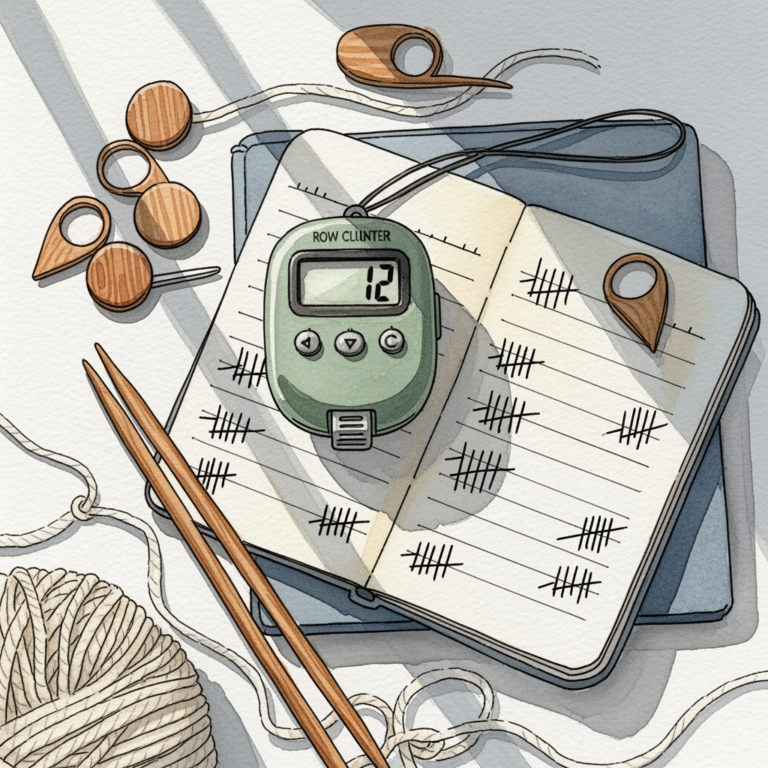
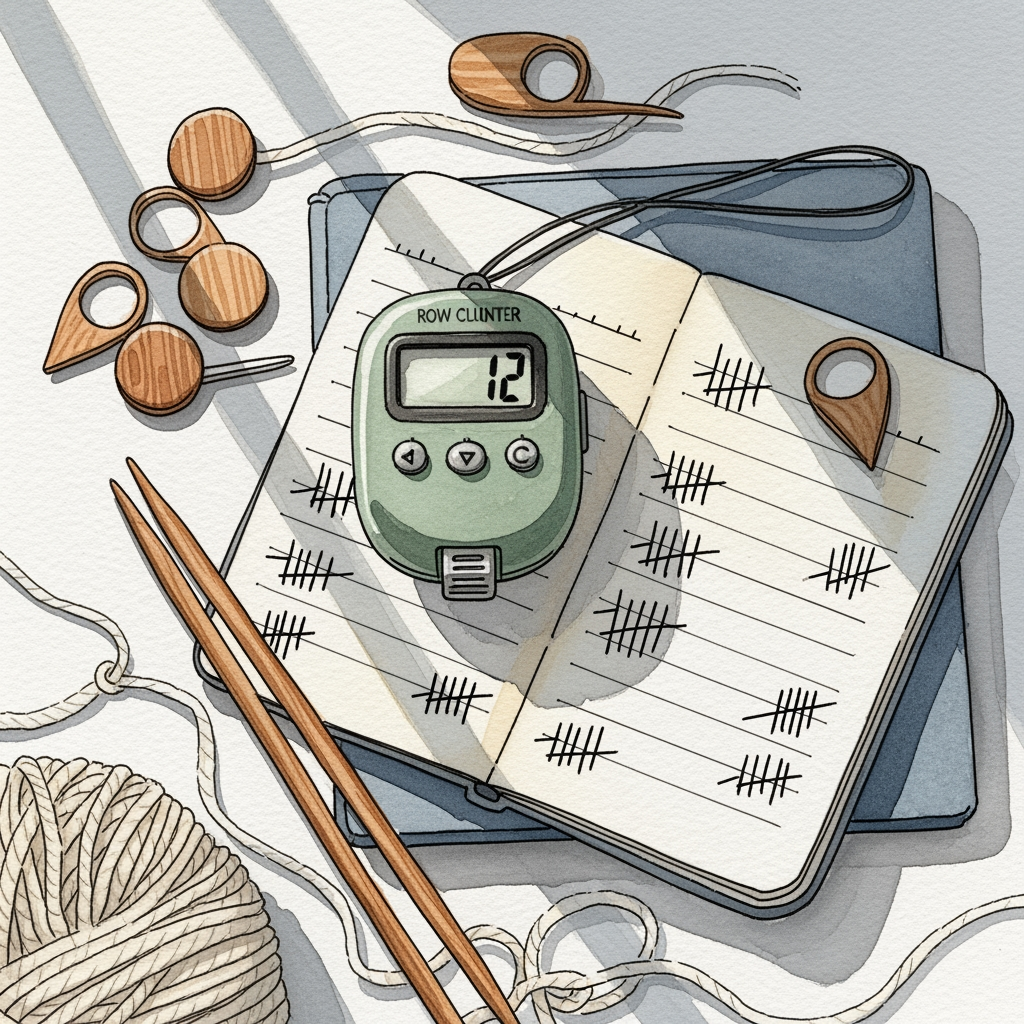
Digital counters offer a level of precision that manual tools sometimes lack, especially when dealing with high-row-count projects like blankets or sweaters. The Susan Bates digital model is a staple for those who prefer a clear, backlit display.
The digital interface removes the ambiguity of "did I click that or not?" that sometimes plagues manual counters. You can clearly see your progress at a glance, which is a huge psychological boost when you are halfway through a long, repetitive project.
The tradeoff is the reliance on a battery. There is nothing more frustrating than reaching the end of a row only to find your digital display has gone blank due to a dead battery.
Bottom line: Ideal for high-row-count projects where visibility and accuracy are non-negotiable.
Boye Plastic Knitting Row Counter Set Review

The Boye plastic counters are the classic "needle-mounted" style that have been around for generations. They slide directly onto the end of your needle, making them a permanent fixture of your knitting setup.
This design is brilliant for keeping your count attached to the specific project needles you are using. If you have multiple projects on the needles at once, you won’t have to worry about which counter belongs to which set of needles.
However, they can be bulky and may feel heavy on one end of your needle, especially if you are using lightweight bamboo or carbon fiber needles. They can also occasionally snag on your yarn if you are not careful about how you turn your work.
Bottom line: A practical, affordable solution for knitters who want their counter permanently attached to their project.
KnitPicks Locking Stitch Markers for Tracking

Sometimes, the best row counter isn’t a mechanical tool at all, but a simple locking stitch marker. By placing a marker every 10 or 20 rows, you create a physical anchor point that is impossible to ignore.
This method is incredibly helpful for checking your gauge and ensuring you haven’t accidentally added or subtracted stitches over a long period. It is the safest way to track progress when working with slippery, high-twist yarns that might hide mistakes.
The downside is that you have to manually count your rows to verify your progress if you lose track of which marker you are on. It requires a bit more "math" than a digital or clicker counter.
Bottom line: Use this as a failsafe to verify your electronic or manual counters.
How to Choose the Right Row Counter for Your Style
Choosing the right counter depends entirely on your personal knitting "personality." If you are a process knitter who loves the rhythm of the needles, a ring-style counter will likely be your best friend.
If you are a goal-oriented knitter who enjoys seeing the numbers climb on a digital screen, look for a high-quality digital counter. Consider your environment as well; if you knit mostly at home, a large desk-top counter is fine, but for travel, you need something compact.
Always consider your tension and fiber choice. If you are working with a delicate, snag-prone lace weight, avoid needle-mounted counters that might catch your yarn.
Bottom line: Test different styles to see what integrates most naturally into your existing knitting rhythm.
Digital vs. Manual Counters: Pros and Cons
Manual counters are the reliable workhorses of the knitting world. They don’t require batteries, they are generally inexpensive, and they have a satisfying tactile "click" that confirms your action.
Digital counters excel in clarity and ease of reading. They are often easier to reset and can sometimes store multiple project counts, which is perfect for the knitter who has three or four projects on the go at once.
The primary tradeoff is the "failure point." Manual counters can wear out or be accidentally clicked, while digital counters are subject to battery failure and electronic glitches.
Bottom line: Keep a manual counter as a backup even if you prefer the convenience of a digital device.
Expert Tips for Consistent Progress Tracking
The biggest mistake knitters make is failing to click the counter immediately after finishing a row. Make it a habit to click the counter before you set your needles down, even if you are just grabbing a cup of tea.
If you are working from a printed pattern, keep your counter right on top of the page you are using. This creates a visual connection between the instruction and your progress, making it much harder to skip a step.
Finally, don’t be afraid to use a combination of methods. Using a digital counter for your row count and a locking stitch marker to track pattern repeats is a professional-level strategy for avoiding errors.
Bottom line: Consistency is more important than the tool itself; pick a method and stick to it religiously.
Finding the right row counter is a personal journey that evolves as your knitting skills and project types change. Whether you prefer the tactile click of a manual tool or the precision of a digital display, the most important thing is that your chosen method becomes an automatic part of your process. Remember that tools are meant to serve your creativity, not stifle it, so choose the one that feels most natural in your hands. May your rows always be accurate and your tension perfectly even as you craft your next masterpiece.