7 Best Wool Carders for Custom Fiber Blending
Discover the 7 best wool carders for custom fiber blending. This guide evaluates top tools to help you achieve perfect textures and consistent color mixes.
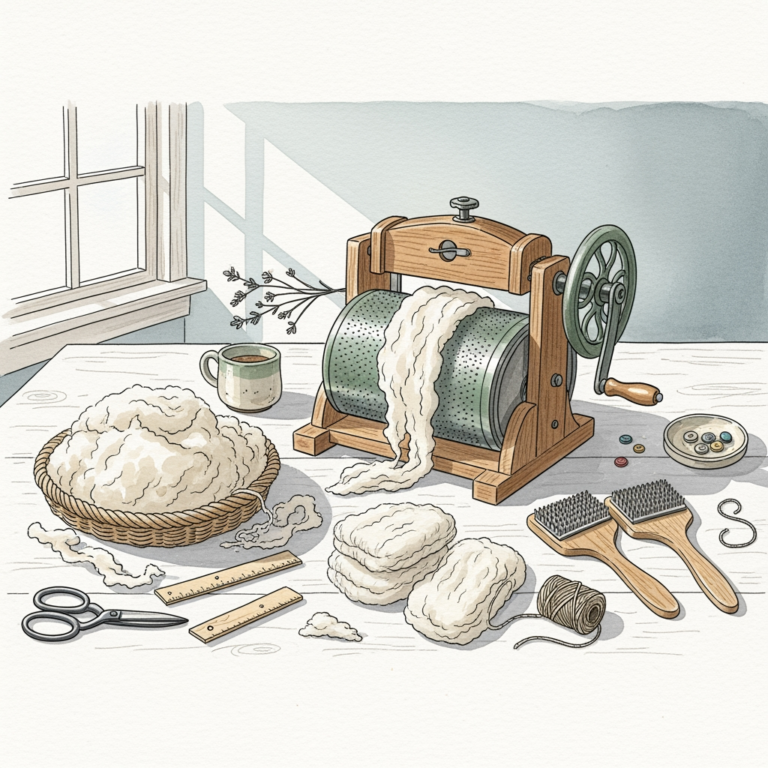
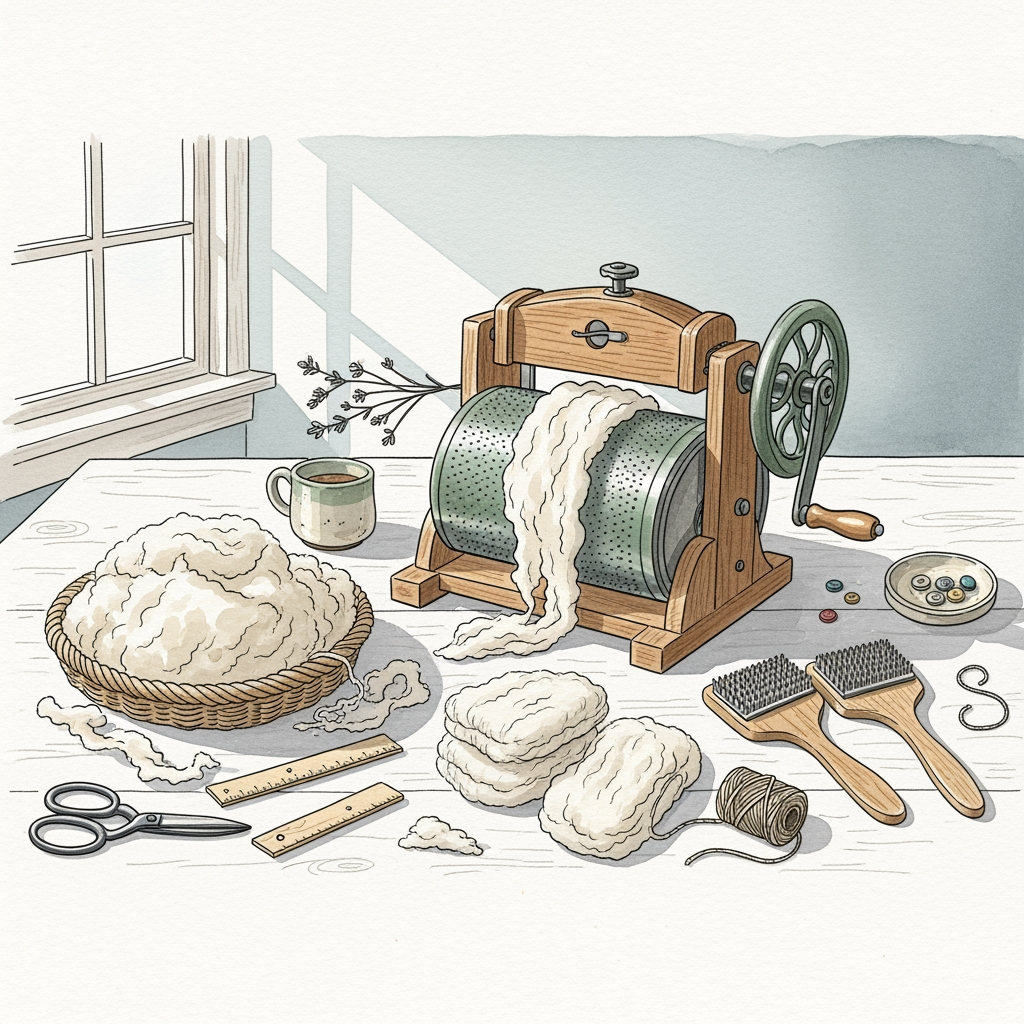
Creating your own custom fiber blends is the ultimate way to achieve a specific drape, color palette, or texture that you simply cannot find in commercially spun yarn. Whether you are blending soft merino with silk for a luxury shawl or adding a touch of mohair to wool for a resilient sweater, the right carder is your most important partner. This guide explores the tools that turn raw, tangled locks into smooth, airy batts ready for spinning or felting. Choosing the right equipment transforms a tedious chore into a meditative part of your creative process.
Strauch Finest Carder: The Gold Standard Choice
When you walk into a professional studio, you will almost always find a Strauch sitting on the table. It is widely considered the "gold standard" because of its incredibly smooth action and precise engineering.
The primary advantage here is the brush attachment, which helps control the fibers as they go into the drum. This prevents the "flyaway" effect that happens with lighter, loftier fibers like angora or alpaca.


If you are serious about producing consistent, professional-grade batts for high-end projects, this is the investment to make. It handles everything from coarse wools to delicate luxury fibers with equal ease.
Ashford Hand Carders: Best for Small Batches
Sometimes, you don’t need a massive drum carder to achieve a beautiful blend. Hand carders are the traditional way to prepare fiber, offering you complete control over how much air and loft remain in your wool.
Ashford’s hand carders are lightweight and ergonomically designed to reduce wrist fatigue. They are perfect for when you only need to blend a small amount of fiber for a specific color accent or a tiny project like a doll’s sweater.
The trade-off is the time commitment; hand carding requires patience and physical effort. However, the intimacy of working the fibers by hand allows you to feel exactly when the locks have opened up and are ready for spinning.
Patrick Green Pat Green Single Wide Carder

Patrick Green carders are legendary in the fiber community for their rugged, "tank-like" build quality. These machines are designed to last for generations, often outliving their original owners.
The single wide design is particularly useful for those who want to create a standard-sized batt without the bulk of a double-wide machine. It is a workhorse that excels at processing raw fleece that might be slightly more "difficult" or VM-heavy (vegetable matter).
If you value longevity and mechanical simplicity, this is a fantastic choice. It isn’t the flashiest tool on the market, but it is one of the most reliable for consistent, daily use.
Brother Drum Carder: Best Value for Beginners
If you are just starting your journey into custom blending, the price tag of professional equipment can be daunting. The Brother Drum Carder offers an excellent entry point without sacrificing the essential functionality you need.
It provides a solid, reliable experience that allows you to learn the mechanics of fiber preparation without a massive financial hurdle. It is well-suited for standard wools and medium-staple fibers.
While it may lack some of the refined features of a high-end Strauch, it gets the job done effectively. It’s an honest tool for a knitter who wants to experiment with blending before committing to a lifetime investment.
Howard Brush Co. Hand Carders: Pro Quality
Howard Brush Co. has been manufacturing carding cloth for decades, and their hand carders reflect that deep industry knowledge. These are professional-grade tools that feel substantial in the hand.
The density of the teeth on these carders is exceptional, which is critical for fine-tuning your blends. High-quality teeth ensure that you aren’t just rearranging the fiber, but truly opening it up to prevent knots and neps in your finished yarn.
If you are a fan of hand carding but find standard options feel flimsy, these are a significant upgrade. They provide the precision necessary for complex color blending where exact ratios matter.
Fancy Kitty Drum Carder: Best Heavy Duty Pick
For the knitter who plans on processing large amounts of fleece, the Fancy Kitty is a formidable choice. These carders are built for heavy-duty output and can handle significant volume in a single session.
Their design often incorporates a high gear ratio, which makes turning the handle feel effortless, even when the drum is packed with fiber. This is a game-changer if you have a large stash of raw fleece waiting to be processed.
It is a larger, heavier machine, so ensure you have a dedicated space for it. The sheer efficiency of this carder makes it ideal for those who spin high yardages and need to keep their supply of rolags or batts consistent.
Clemes & Clemes Standard Carder: Built to Last
Clemes & Clemes is a name synonymous with heritage fiber tools. Their standard carder is a beautiful piece of craftsmanship that looks as good as it performs.
These machines are known for their exceptional wood quality and sturdy construction. They offer a very smooth, quiet carding experience, which is a blessing if you spend hours at your fiber station.
While they are a premium investment, the performance is consistent and the maintenance is straightforward. For the knitter who appreciates tools that are as beautiful as they are functional, this is the top pick.
Understanding TPI: Choosing the Right Carding Cloth
TPI stands for "teeth per inch," and it is the most critical technical specification when choosing a carder. A higher TPI is generally better for fine, short-staple fibers, while a lower TPI is better for long, coarse wools.
- 72 TPI: Excellent for general-purpose wool and medium-staple fibers.
- 120 TPI: Designed for fine, delicate fibers like angora, cashmere, or fine merino.
If you try to card coarse wool on a 120 TPI cloth, the carder will clog instantly. Conversely, using 72 TPI for fine silk will result in poor blending and messy, uneven batts.
How to Maintain and Clean Your Drum Carder Teeth
Your carder is an investment, and like any fine tool, it requires regular maintenance. After every session, use a flick brush or a dedicated carding cleaning tool to remove the "leftover" fiber trapped in the teeth.

Avoid using sharp metal objects to pry out stuck fibers, as this can bend or break the delicate teeth. If the teeth become dull or bent over years of use, many manufacturers offer re-clothing services to restore your tool to like-new condition.
Keep the mechanical parts lightly oiled according to the manufacturer’s instructions. A well-maintained carder will provide a smooth, consistent experience for decades.
Essential Tips for Perfect Custom Fiber Blending
The secret to a great blend is to "thin out" your layers. Do not try to jam too much fiber onto the drum at once, as this leads to uneven, lumpy batts that are difficult to spin.
- Layering: Alternate your colors or fiber types in thin, uniform layers across the feed tray.
- The "Pass" Rule: Don’t be afraid to run the fiber through the carder two or three times for a more thorough, uniform blend.
- Moisture: If your fiber is very static-prone, a tiny mist of water or specialized anti-static spray can make a world of difference.
Remember that custom blending is an iterative process. Keep a notebook of your fiber ratios and results so you can replicate your favorite "recipes" for future sweaters or accessories.
Investing in a quality drum or hand carder is the first step toward total control over your yarn’s character. Whether you choose the precision of a Strauch or the rugged reliability of a Patrick Green, your finished projects will reflect the care you put into every batt. Take your time, experiment with different fiber combinations, and enjoy the tactile satisfaction of creating something truly unique from scratch. Happy blending, and may your batts always be smooth and your spinning effortless.