6 Best Bead Looms For Woven Fiber Accents To Try
Discover the top 6 bead looms for crafting intricate fiber accents. Our guide covers essential features to help you choose the perfect tool for your projects.
Incorporating intricate beadwork into knitted or woven fiber projects creates a stunning textural contrast that elevates simple stockinette or plain weave into heirloom-quality art. Choosing the right bead loom is just as critical as selecting the perfect yarn weight or needle material for your specific tension. Whether you are adding delicate seed bead accents to a lace shawl or creating a bold, beaded tapestry, the loom you choose dictates your workflow and creative freedom. This guide explores the best tools to bridge the gap between beadwork and fiber arts, ensuring your next project is as structurally sound as it is beautiful.
Mirrix Lani Loom: Best Professional Choice
The Mirrix Lani is the gold standard for those who treat their fiber arts with the same rigor as a professional studio practice. Its heavy-duty construction provides a level of stability that cheaper frames simply cannot replicate, which is vital when you are working with high-tension warp threads.


If you have ever struggled with a project "bowing" or losing its rectangular shape mid-weave, you will appreciate the rigid metal frame. It holds the tension perfectly, allowing you to incorporate heavy wools or metallic threads alongside delicate glass beads without the loom warping under the strain.
While it is an investment, the ability to adjust the shedding device makes it incredibly versatile for complex patterns. It is the perfect choice for the serious maker who wants a tool that will last for decades of experimentation.
Beadsmith Jeweler’s Loom: Best for Beginners
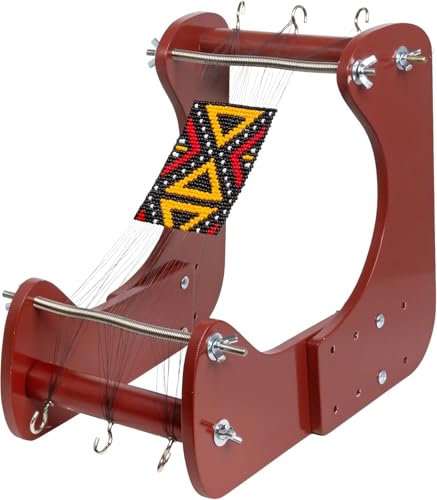
If you are just starting to experiment with beaded accents, you don’t need a complex piece of heavy machinery. The Beadsmith Jeweler’s Loom is approachable, intuitive, and designed to help you get your first few rows of beads secured without frustration.
The assembly is straightforward, which is a massive plus when you are already juggling new techniques like managing warp threads and bead placement. It is lightweight, meaning you can easily move it from your craft room to the living room while you knit your main project.
Keep in mind that this loom is primarily designed for smaller pieces. If you try to push it to its maximum width, you might notice the frame flexes slightly, so stick to narrow bands or small accents until you are comfortable with the tensioning process.
Baby Ricki Loom: Best Portable Bead Tool

For the knitter who loves to work on the go, the Baby Ricki is a game-changer. It is compact enough to fit inside a standard project bag, making it ideal for taking your beadwork to a knitting circle or on a long train ride.
Despite its small footprint, it is surprisingly sturdy. It uses a simple tensioning system that is easy to adjust on the fly, which is essential when your yarn choice changes from a smooth silk to a more textured mohair blend.
The trade-off here is the workspace size; you won’t be weaving large panels on this tool. However, for creating beaded embellishments to sew onto a finished sweater or scarf, it is arguably the most convenient tool on the market.
Clover Beading Loom: Best for Small Projects

The Clover Beading Loom is a masterclass in functional, simple design. It is perfect for those tiny, intentional details—like a beaded border on a cuff or a small geometric patch—that add that "wow" factor to a hand-knitted garment.
What I love about this loom is how easy it is to change the warp threads. If you are experimenting with different fiber weights, you can swap your warp in seconds, which encourages more creative play during the design process.
Because it is plastic, it is very lightweight, but it lacks the heavy-duty tensioning of a metal loom. Use this for lightweight, decorative accents rather than structural, load-bearing pieces, and you will find it to be a reliable companion.
Schacht Cricket Loom: Best for Fiber Blends
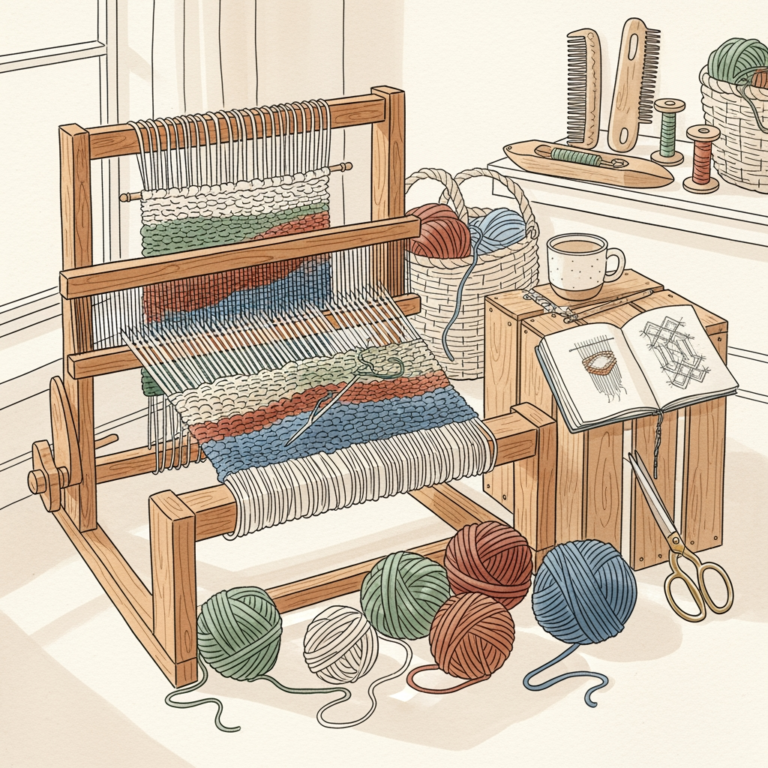
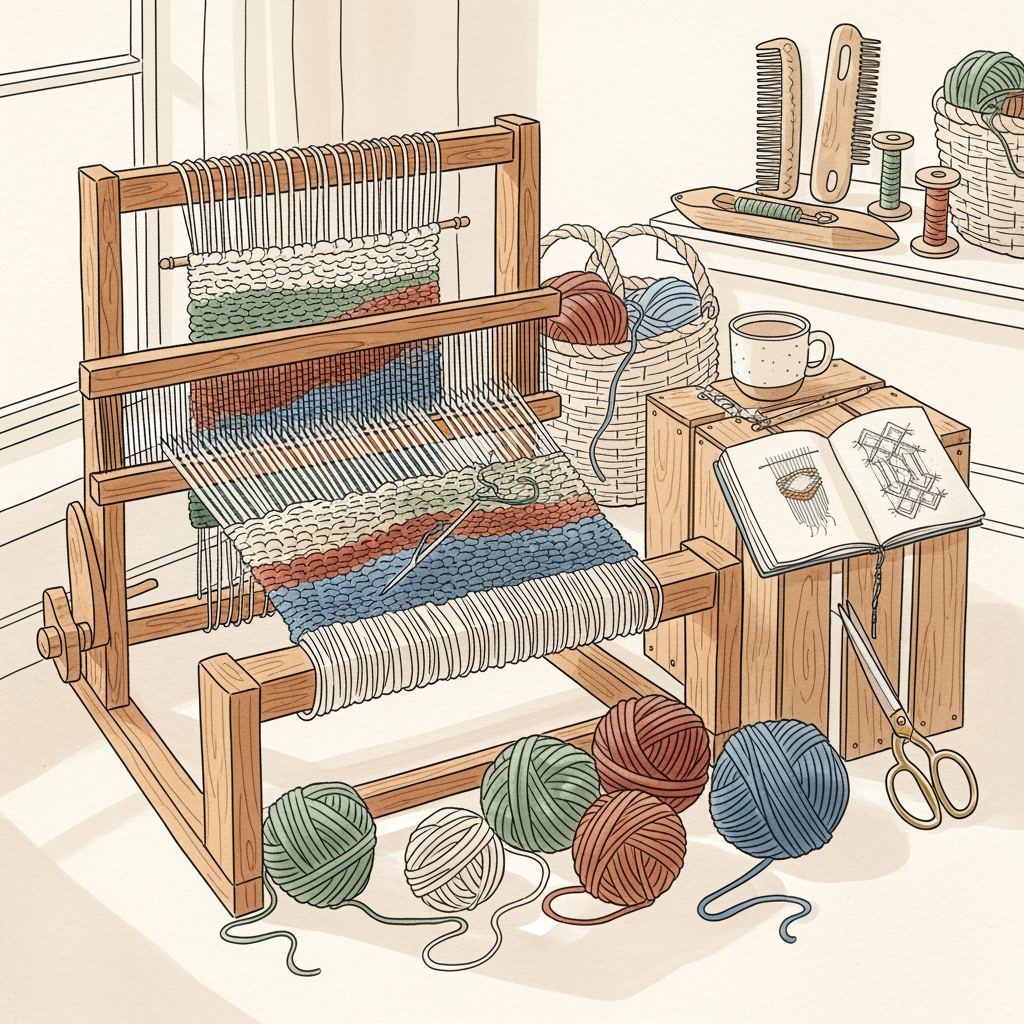
The Schacht Cricket is technically a rigid heddle loom, but it is a secret weapon for fiber artists who want to weave beads directly into a larger textile. If you are looking to create a scarf that is half-woven fiber and half-beaded inlay, this is your best bet.
It allows you to work with a much wider range of yarn weights than a traditional bead loom. You can use your favorite worsted weight wool as the warp and integrate beads into the weft, creating a fabric that is both cozy and ornate.
This is a more complex tool than the others on this list, so be prepared for a steeper learning curve. However, for the knitter who wants to transition into full-scale weaving, it offers the most room for growth and technical exploration.
Endless Loom: Best for Seamless Designs
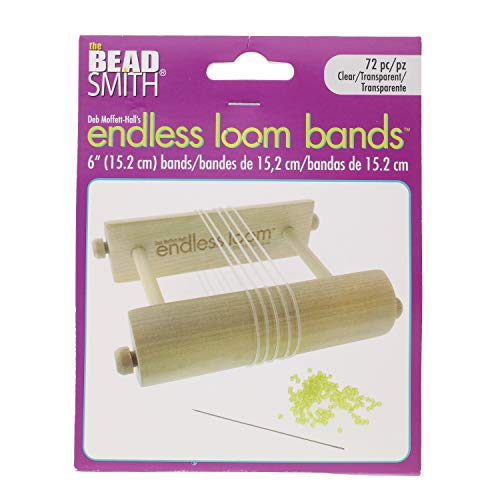
The Endless Loom is a brilliant innovation for anyone who dislikes finishing work. Its unique design allows you to weave in a continuous loop, which is perfect for creating cuffs, headbands, or beaded collars that don’t have a visible seam.
When you are weaving with fiber, having a seamless piece means you don’t have to worry about bulky knots or awkward joins that could irritate the skin. It creates a smooth, professional finish that looks like it was custom-made for the wearer.
The learning curve involves mastering the "endless" warp, which requires a bit of patience to set up correctly. Once you get the hang of it, the efficiency and the clean, polished result are well worth the initial effort.
How to Choose the Right Loom for Your Project
Choosing a loom comes down to the scale of your vision and the weight of your materials. If you are working with fine silk threads and tiny seed beads, you need a loom with precise tension control, like the Mirrix.
- Project Size: Are you making a small accent or a full-sized fabric?
- Material Weight: Are you using delicate silk or rustic, heavy wool?
- Portability: Do you need to pack your loom away between knitting sessions?
Always consider the "finished product" goal. If you are creating a piece that needs to withstand daily wear, prioritize a loom that allows for high, consistent tension. If you are creating delicate lace-like jewelry, a lighter, more portable option will suffice.
Essential Tools for Weaving Fiber Accents
Beyond the loom itself, you need a few specialized tools to make your life easier. A high-quality beading needle is non-negotiable; look for needles that are flexible enough to pass through beads multiple times but sturdy enough not to snap under tension.
- Bead Mat: Prevents your beads from rolling away and keeps them organized.
- Tapestry Needles: Essential for weaving in yarn ends securely once your beadwork is finished.
- Thread Conditioner: Helps prevent your warp threads from fraying, especially if you are using natural fibers like cotton or linen.
Don’t underestimate the importance of good lighting. When you are working with small beads and dark yarns, a dedicated task lamp is the best investment you can make to prevent eye strain.
Understanding Warp Tension in Beaded Weaving
Warp tension is the heartbeat of your weaving. If your warp is too loose, your beads will shift and your pattern will look distorted; if it is too tight, your warp threads may snap, especially if you are using delicate fibers like mohair or single-ply wool.
The trick is to find the "sweet spot" where the threads are taut but still have a tiny bit of "give." Think of it like maintaining even tension while knitting; you want a consistent pull across the entire width of your warp.
Always test your tension with a small sample before starting your main project. If you notice the beads are "popping" out of place, your tension is likely too high, or your warp threads are too thick for the beads you are using.
Tips for Integrating Fiber Into Bead Looms
Blending yarn and beads is all about balance. If your yarn is very fuzzy, like an angora or a brushed alpaca, it can catch on the beads and make the weaving process difficult. Stick to smooth, tightly plied yarns for your warp to ensure the beads slide into place easily.
When integrating fiber into the weft, play with texture. A thick, textured yarn used every few rows can create a beautiful, "bumpy" contrast against a smooth, uniform row of glass beads.
Finally, remember to block your finished piece. Just like a hand-knit sweater, a beaded fiber project will benefit from a gentle soak and a flat dry, which helps the fibers relax and the beads settle into their final, perfect position.
Integrating beadwork into your fiber arts practice opens up a world of texture and color that yarn alone simply cannot achieve. By selecting the right loom for your specific project and respecting the mechanics of warp tension, you can create pieces that are as durable as they are exquisite. Take your time to experiment with different fiber and bead combinations, and don’t be afraid to let your own creative intuition guide the process. May your stitches be even, your tension be perfect, and your next project be a true reflection of your unique maker’s voice.