7 Best Self Healing Mats For Workspace Protection
Protect your desk with our top 7 self-healing mats. These durable surfaces prevent scratches, ensuring a pristine, long-lasting workspace for every project.
A cluttered workspace is the enemy of a peaceful knitting session, especially when you are trimming excess yarn or cutting fabric for a quilt-lined bag. A high-quality self-healing mat protects your table from rotary blades while keeping your workspace organized. Choosing the right surface is as foundational as picking the correct needle material for your specific yarn fiber. Here are the top seven mats to keep your craft room pristine and your tools in peak condition.
Fiskars Self-Healing Rotary Cutting Mat: Best Overall


Fiskars is a household name for a reason, and their self-healing mat is a reliable workhorse. If you frequently trim your finished swatches or cut fabric for project bags, this surface stands up to repetitive blade pressure without developing deep, unsightly grooves.
The self-healing technology is impressive, effectively closing up after each pass of a rotary cutter. It is neither too soft nor too firm, providing the perfect resistance for clean, crisp cuts. It’s the "Goldilocks" of mats—reliable for everything from heavy wool felt to delicate cotton linings.
The bottom line: If you want a dependable, no-nonsense mat that handles daily wear and tear with ease, this is your best bet. It’s a solid investment that won’t let you down during a long afternoon of prep work.
Dahle Vantage Self-Healing Mat: Best for Precision
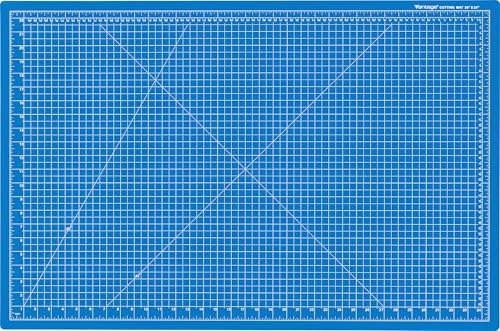
When you are working on intricate appliqué or precise pattern cutting, the Dahle Vantage is unmatched. This mat features a unique construction that prevents your blade from catching, which is vital when you need a perfectly straight edge.
The surface is slightly firmer than others, which feels much like working on a professional-grade drafting table. If you are someone who obsessively measures your gauge swatches or cuts fabric to the millimeter, the stability here is a game-changer.
The tradeoff is that it is slightly less "cushy" than cheaper options. However, for the precision-focused crafter, that firmness ensures your blade doesn’t wander.
OLFA Double-Sided Rotary Mat: Best for Durability

OLFA is synonymous with the rotary cutter, so it makes sense that their mats are built to last. These mats are remarkably dense, designed to withstand the heavy-duty pressure often required when cutting multiple layers of thick batting or heavy denim.
The double-sided feature is a massive bonus for those of us with limited desk space. One side is printed with clear, easy-to-read grid lines for measuring, while the other side is plain, providing a clean surface for projects that don’t require constant measurement.
Don’t let the thickness intimidate you; while it’s heavy, it stays perfectly flat on your table. It’s a professional-grade tool that will likely outlive several of your rotary blades.
Alvin Professional Self-Healing Mat: Best for Size
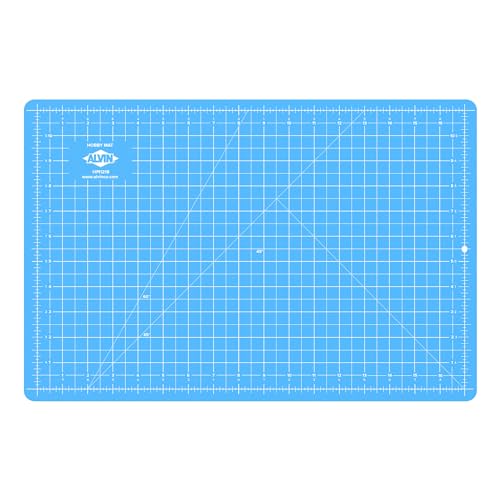
If you are a quilter or someone who works on large-scale garment construction, you know the frustration of a mat that is too small. The Alvin Professional mat offers a generous surface area that allows you to lay out your entire project without constant repositioning.
Having a large, uninterrupted surface prevents the "stair-stepping" effect that happens when you have to shift fabric mid-cut. It’s the equivalent of having a long circular needle cable for a massive blanket—it just makes the process flow better.
While the size is a luxury, ensure your workspace can actually accommodate the footprint. If you have the room, the extra space is worth every penny for the convenience it provides.
Arteza Self-Healing Cutting Mat: Best Value Choice

You don’t always need to break the bank to get a high-quality surface. The Arteza mat offers excellent self-healing properties at a price point that leaves more room in the budget for high-quality yarn or notions.
It features a non-slip surface, which is crucial when you are cutting slippery silk or lightweight cotton linings. If your mat slides around while you’re trying to make a precise cut, you risk ruining your fabric—or worse, your fingers.
It’s an excellent entry-level choice that doesn’t feel "cheap." While it may show wear a bit faster than a professional-grade OLFA, it is more than sufficient for the average hobbyist.
MyCrafts Double-Sided Mat: Best for Color Options
Let’s be honest: crafting is more enjoyable when your tools look good. MyCrafts offers a variety of colors that can help brighten up a dark workspace or coordinate with your studio’s aesthetic.
Beyond the aesthetics, the color contrast on the grid lines is excellent. If you are working with dark-colored yarns or fabrics, choosing a lighter-colored mat can help you see your edges much more clearly, reducing eye strain during late-night crafting sessions.
These mats are functional, durable, and fun. They prove that you don’t have to sacrifice style for utility in your workspace.
US Art Supply Self-Healing Mat: Best for Beginners

If you are just starting to incorporate sewing or mixed-media into your fiber arts practice, the US Art Supply mat is the perfect starting point. It is straightforward, easy to clean, and provides a clear grid for learning how to measure and cut correctly.
The material is forgiving, which is important when you are still mastering the angle and pressure of a rotary cutter. It provides enough "give" that you won’t feel like you’re fighting the surface while you learn the ropes.
It’s an honest, basic tool that does exactly what it claims to do. Start here, learn your technique, and you can always upgrade later if your project needs become more complex.
Why Fiber Artists Need a Dedicated Cutting Surface
While we spend most of our time with needles and hooks, our workspace often involves more than just yarn. Whether you are trimming the ends of a fringe, cutting fabric for a project bag, or squaring up a knitted block for a quilt, you need a surface that protects your table and your blade.
Using a kitchen table or a desk without a mat is a recipe for disaster. You will quickly dull your rotary blades, and you’ll likely leave permanent scratches on your furniture.
- Protect your tools: A dull blade leads to frayed edges and uneven cuts.
- Protect your furniture: Deep gouges in wood tables are impossible to repair.
- Improve accuracy: The grid lines on a mat act as a guide for perfect 90-degree angles.
How to Properly Maintain Your Self-Healing Mat
A self-healing mat is an investment, and like your favorite wooden knitting needles, it requires a little care to stay in top shape. The most important rule is to keep it away from extreme temperatures; never leave it in a hot car or near a heater, as it will warp permanently.
You should also rotate your cutting area frequently. If you always cut in the center of the mat, that area will wear out faster than the edges, leading to uneven surfaces.
- Clean regularly: Wipe it down with a damp cloth and a mild soap to remove dust and yarn fibers.
- Store flat: Never fold or roll your mat, as this creates permanent creases.
- Avoid heat: Keep it out of direct sunlight to prevent the material from becoming brittle.
Essential Workspace Safety Tips for Crafting Tools
Safety is just as important in the craft room as it is in the woodshop. Rotary cutters are incredibly sharp; always engage the safety lock the moment you finish a cut, even if you’re only setting it down for a second to adjust your yarn.
Always cut away from your body, and keep your fingers well clear of the blade’s path. If you are feeling fatigued after a long day of knitting, put the cutting tools away—that is when accidents are most likely to happen.
- Use a ruler: Always use a metal-edged ruler to guide your blade rather than cutting freehand.
- Change blades: A dull blade requires more pressure, which increases the likelihood of a slip.
- Clear the deck: Keep your workspace free of loose yarn, needles, and scissors before you start cutting.
Investing in a quality self-healing mat is a simple step that pays dividends in both workspace longevity and project accuracy. By choosing a surface that matches your specific crafting needs, you ensure that your tools stay sharp and your table stays pristine. Take the time to care for your mat, and it will remain a reliable companion for years of creative projects. Happy crafting, and may your cuts always be as clean as your stitches.