6 Best Tape Measures For Precise Garment Sizing
Find your perfect fit with our guide to the 6 best tape measures. We compare durability, readability, and precision to ensure accurate garment sizing every time.
Achieving a perfect fit in your hand-knits begins long before you cast on your first stitch. A reliable tape measure is the foundation of accurate gauge swatching and body mapping, ensuring your hard work isn’t lost to poor sizing. Whether you are crafting a fitted sweater or delicate socks, precision is your best friend. These six tools represent the gold standard for measuring your progress and your frame.
Dritz Ezy-Check: The Best Overall Tape Measure
The Dritz Ezy-Check is a staple in my knitting bag because it offers a rare combination of flexibility and readability. When you are measuring the length of a sweater body before starting the armhole decreases, you need a tape that lays flat against your work without curling.
This tape is made from a non-stretch material, which is critical for fiber arts. If your tape stretches even a millimeter, your finished garment could end up inches off your intended size. It’s a reliable workhorse that won’t fail you during long-term projects.
The standout feature here is the clear, high-contrast printing. For those late-night knitting sessions where lighting might be less than ideal, this tape ensures you aren’t squinting to find the 14-inch mark. It is the most balanced choice for everyday knitting.
Singer Professional Retractable Tape Measure


Retractable tapes are a divisive topic among knitters, but the Singer Professional model is a cut above the flimsy options found in basic sewing kits. The mechanism is smooth, meaning it won’t snap back and fray the edges of the tape over time.

I find these particularly useful when I’m on the go, such as when I’m knitting at a local meet-up or traveling. It keeps the tape clean and protected from snagging on your yarn or needles in your project bag.
However, be aware that the housing can sometimes add bulk. If you prefer a minimalist kit, this might feel slightly cumbersome compared to a flat tape. Choose this if you prioritize protection and portability over a slim profile.
Clover 150cm Tailor Tape: Best for Precision

Clover has a reputation for engineering excellence, and their tailor tape is no exception. It is exceptionally soft and pliable, which is essential when measuring curved surfaces like your bust or the circumference of a sleeve.
Because it lacks a stiff, plastic coating, it hugs the body perfectly without creating gaps. When you are measuring for a custom-fit yoke, this level of contact is the difference between a garment that fits like a glove and one that sags.
It is calibrated with extreme accuracy, making it my go-to for high-stakes projects like intricate lace shawls where blocking dimensions must be exact. It is the ultimate tool for the perfectionist knitter.
Hemline Retractable Tape: Best for Portability
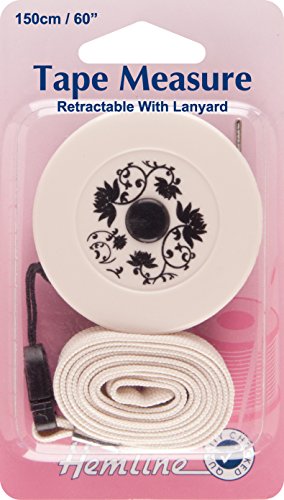
The Hemline tape is designed for the knitter who keeps a "go-bag" ready at all times. It is compact, lightweight, and features a reliable locking mechanism that holds the tape in place while you take your measurements.
The trade-off with smaller retractable tapes is that the tape itself can be narrower than a standard tailor’s tape. This doesn’t affect accuracy, but it can make it slightly harder to read if you are struggling with your eyesight.
Still, for quick checks on the length of a cuff or the height of a heel flap, it is unmatched. It is the best choice for knitters who value a clutter-free project bag.
Fiskars 60-Inch Tape: Best for Durability

Fiskars is synonymous with durability, and this tape is built to withstand years of heavy use. The material is resistant to tearing and fraying, even if you accidentally catch it on a sharp metal needle tip.
I often recommend this to beginners who are just starting their tool collection. You don’t want to replace your measuring tools every season; you want a tool that grows with your skill set.
The markings are printed in a way that resists fading, even after constant contact with the oils from your hands. This is a long-term investment for the knitter who plans to make sweaters for years to come.
Collins Fiberglass Tape: Best Value Choice

If you are a knitter who tends to lose tools, the Collins Fiberglass tape is a fantastic, affordable option. It provides the essential functionality you need without the premium price tag of more specialized brands.
Fiberglass is a great material because it is inherently resistant to stretching. Even at a lower price point, you are getting a tool that maintains its integrity over the course of a large-scale project like a king-sized blanket.
While it might lack the aesthetic finish of a high-end tailor’s tape, it performs the job with total competence. It is the best value choice for stocking up your home studio.
Why Accurate Measurements Matter for Garments
Knitting is essentially math in motion, and your tape measure is your primary calculator. If your measurements are off, your gauge swatch—the small sample you knit to determine stitches per inch—will be calculated against the wrong body dimensions.
A sweater that is meant to have two inches of positive ease can quickly become a tent if you measure your bust incorrectly. Conversely, a tight-fitting garment will feel restrictive and uncomfortable if you underestimate your measurements.
- Positive Ease: The garment is larger than your body.
- Negative Ease: The garment is smaller than your body (common for socks and hats).
- Zero Ease: The garment matches your body measurements exactly.
How to Measure Your Body for a Perfect Fit
Always measure yourself while wearing the undergarments you intend to wear under your finished knit. A thick bra or a bulky undershirt will add unwanted volume and throw off your final sizing.
Stand straight, breathe naturally, and do not pull the tape measure tight. You want the tape to touch your skin without indenting it; if you pull it too hard, you will knit a garment that is too small.
- Bust: Measure at the fullest part.
- Waist: Measure at the narrowest part of your torso.
- Hips: Measure at the widest part of your seat.
- Upper Arm: Measure the fullest part of your bicep.
Essential Tips for Maintaining Your Tape Measure
To keep your tape accurate, store it rolled or flat, never folded. Folding a tape measure creates creases that eventually lead to cracks and permanent distortion of the material, making your measurements unreliable.
Keep it away from extreme heat, which can cause some plastic or fiberglass tapes to warp over time. If you use your tape near your yarn, ensure it is clean to avoid transferring dirt or oils onto your delicate fibers.
Periodically check your tape against a metal ruler to ensure it hasn’t stretched or shrunk. If it deviates by more than a sixteenth of an inch, it is time to replace it.
Metric vs. Imperial: Understanding Scale Needs
Most patterns in the fiber arts world use both inches and centimeters, but you should choose the one you find most intuitive. I find that centimeters are often more precise for small-scale measurements, such as heel turns on socks.
However, many traditional patterns are still written exclusively in inches. If you are working from a vintage pattern, you will likely need an Imperial tape to avoid constant, error-prone conversions.
Ultimately, consistency is more important than the system. Pick one scale and stick to it for the duration of your project to avoid accidental math errors.
Investing in a quality tape measure is one of the simplest ways to elevate the professional look of your finished garments. By choosing a tool that suits your personal workflow, you remove the guesswork from your sizing and ensure your hard work fits exactly as intended. Take the time to measure correctly, treat your tools with care, and your knitting will reflect the precision you put into it. Happy stitching!