6 Best Yarn Scale Tools For Yardage Tracking
Accurately track your yarn stash with these 6 top-rated scales. Discover reliable tools to measure yardage and manage your knitting projects with precision.
Every knitter knows the sinking feeling of playing "yarn chicken" toward the end of a sweater sleeve. Relying on visual estimates is a recipe for heartbreak, especially when you are working with expensive hand-dyed wools. A high-quality digital scale transforms your yarn stash from a guessing game into a precise inventory. These six tools provide the accuracy you need to knit with confidence and avoid mid-project panic.
My Weigh iBalance 201: Best Professional Scale


If you are a serious designer or a prolific stash-builder, the iBalance 201 is the gold standard. It offers an incredible level of sensitivity that picks up even the slightest weight variations in delicate lace-weight fibers.
The stainless steel platform is large enough to hold a full 100-gram skein without obscuring the display. This is a massive quality-of-life upgrade when you are trying to weigh a bulky sweater quantity of yarn.
While it is an investment, the professional-grade sensors are built for longevity. It is the tool I reach for when I need to ensure my yarn consumption math is absolutely bulletproof.
American Weigh Scales AMW-1KG: Best Compact Pick

For knitters who travel to workshops or knit groups, the AMW-1KG is a reliable companion. It is small enough to tuck into a notions pouch, yet it handles up to a full kilogram with ease.
The compact design does mean the platform is smaller, so you may need to balance larger skeins carefully. I recommend using a small bowl or a dedicated project bag to hold the yarn while weighing to keep the display visible.
It is a no-frills, durable workhorse that gets the job done without taking up valuable desk space. For the price, it is an essential tool for keeping your stash organized on the go.
Etekcity Digital Kitchen Scale: Best Budget Tool

You don’t need a lab-grade instrument to track your yarn usage effectively. The Etekcity scale is a favorite among knitters because it is affordable, widely available, and incredibly simple to use.
The interface is intuitive, which is helpful when you are already juggling a pattern, a cup of tea, and your knitting needles. It handles the standard weights of most commercial yarn balls perfectly.
While it lacks the hyper-precision of more expensive models, it is more than accurate enough for 99% of knitting projects. If you are just starting to track yardage, this is the perfect entry point.
Ozeri Pronto Digital Scale: Best for Precision

Precision is paramount when you are working with luxury fibers like cashmere or silk, where every gram represents significant cost. The Ozeri Pronto is designed with a refined sensor array that provides consistent, repeatable results.
The unit features a dedicated "tare" button, which is essential for subtracting the weight of your project bag or a container. This allows you to weigh your yarn directly without worrying about the tare weight of your storage solutions.
Its sleek, low-profile design makes it easy to store in a drawer between projects. If your knitting style involves mixing and matching partial skeins for stripes, this precision ensures your color transitions are balanced.
Escali Primo Digital Scale: Best Durable Choice
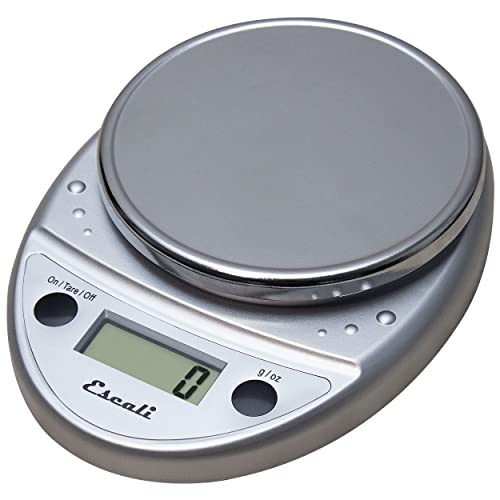
The Escali Primo has earned a legendary reputation in the crafting community for its rugged construction. It is designed to withstand the accidental spills and knocks that happen in a busy craft room.
The control buttons are sealed under a protective cover, which keeps stray fibers and dust from interfering with the electronics. This is a subtle feature, but it adds years to the life of the scale when you are working with shedding mohair or wool.
It is consistently accurate and features a simple, easy-to-read display. If you want a tool that you can buy once and rely on for a decade of knitting, this is your best bet.
Jennings CJ-4000 Scale: Best for Heavy Skeins

When you are working with heavy-duty projects like an oversized wool coat or a king-sized blanket, you need a scale with a higher capacity. The Jennings CJ-4000 handles larger loads while maintaining excellent accuracy.
Many standard kitchen scales struggle or display errors when you approach their maximum weight limit. This model provides the "headroom" necessary to weigh multiple skeins at once, which is a lifesaver for inventory management.
The platform is wide and sturdy, providing a stable base for heavy yarn bundles. It is a specialized tool, but for those working with bulky or super-bulky yarns, it is an indispensable asset.
Why Precision Scales Matter for Yarn Yardage
Yardage is often an estimate provided by the manufacturer, but your actual consumption depends on your personal tension and stitch pattern. A scale allows you to calculate exactly how much yarn you have used for a finished section, such as a sock cuff.
By weighing your yarn before and after knitting a specific segment, you can determine your "burn rate." This removes the guesswork from calculating if you have enough yarn remaining to finish a project.
It also helps you manage your stash effectively. Knowing the exact weight of a partial skein allows you to match it with complementary yarns for scrap-busting projects with precision.
How to Calculate Remaining Yarn Using a Scale
First, weigh your full skein and note the weight and the total yardage provided on the label. Divide the yardage by the weight to find the "yards per gram" for that specific yarn.
Next, weigh your partial skein after you have finished a portion of your project. Subtract the current weight from the original weight to see how many grams you have consumed.
Finally, multiply that consumed weight by your "yards per gram" constant. This will give you a very accurate estimate of how many yards you have used and, conversely, how many you have left.
Factors Affecting Yarn Weight and Accuracy
Keep in mind that ambient humidity can affect the weight of natural fibers like wool or cotton. These fibers are hygroscopic, meaning they absorb moisture from the air, which can slightly increase their weight in humid conditions.
Additionally, manufacturing tolerances mean that two "100-gram" skeins may vary slightly in actual weight. Always weigh your individual skeins before starting a project to ensure your math is based on reality, not just the label.
Finally, ensure your scale is on a flat, level surface every time you use it. Even a slight tilt can throw off the sensitive sensors and lead to inaccurate readings.
Tips for Measuring Partial Skeins Effectively
Always use a consistent container to hold your yarn while weighing, and remember to tare the scale to zero with the empty container on it first. This prevents the weight of your bowl or bag from skewing your results.
If you are weighing a long length of yarn, coil it loosely to prevent it from tangling or putting uneven pressure on the platform. Avoid letting the yarn drape off the scale, as this can pull the weight and lead to an incorrect measurement.
Lastly, keep a small notebook or a spreadsheet to track the weights of your stash. Being able to look back at the weight of a yarn used in a previous project makes planning your next one much faster.
Investing in a digital scale is one of the most practical upgrades you can make to your knitting practice. By moving from estimation to measurement, you gain total control over your yarn supply and eliminate the anxiety of running out mid-row. Choose the scale that fits your project needs and start tracking your yardage today. Your future self will thank you when you reach the end of that final bind-off with yarn to spare.