7 Best Sewing Clips For Seams Worth Trying
Discover the top 7 sewing clips for precise seams. This guide evaluates durability and grip to help you choose the perfect tool for your next fabric project.
Every knitter knows the frustration of watching a carefully aligned seam slide apart just as the sewing needle pierces the fabric. While pins are traditional, they often distort delicate stitches or leave unwanted gaps in your gauge. Sewing clips offer a structural solution that keeps your knitted pieces perfectly aligned without piercing the yarn fibers. These seven tools will transform your finishing process from a tedious chore into a precise craft.
Clover Wonder Clips: The Gold Standard for Seams
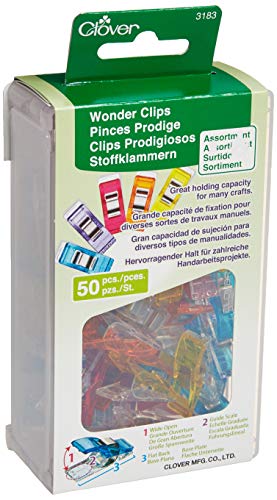

Clover Wonder Clips are the industry benchmark for a reason, offering a consistent tension that rarely fails. Their flat base allows the fabric to sit flush against your workspace, which is essential when you are trying to match up stripes or intricate cable patterns.
For knitters working with slippery fibers like silk or bamboo blends, these clips provide a non-slip grip that holds tight without marring the yarn. They are particularly effective when you are grafting a shoulder seam, as they keep the live stitches steady while you weave your yarn tail.
The tradeoff here is the size; they are quite bulky compared to traditional pins. If you are working on a very tight, small-circumference project like a fingerless glove, they might feel a bit cumbersome. Bottom line: keep a pack of these on hand for all your standard-weight sweater construction.
Wawak Extra-Long Quilting Clips for Thick Knits

When you are seaming a heavy, worsted-weight wool cardigan, standard clips often lack the "bite" required to hold multiple layers of thick fabric. Wawak’s extra-long clips are designed with a deeper reach, allowing you to secure bulky edges that would otherwise spring apart.
These are a lifesaver when you are attaching a heavy ribbed collar to a neckline. The added length ensures that the weight of the garment doesn’t pull the seam out of alignment while you are still working your way around the curve.
Be aware that the spring tension on these is quite strong. If you are working with a delicate, loosely spun single-ply yarn, be careful not to leave them on for too long, as they can compress the loft of the wool. Use them for the heavy lifting, but swap to something lighter for finishing touches.
Dritz Sewing Clips: Reliable Grip for Every Fiber
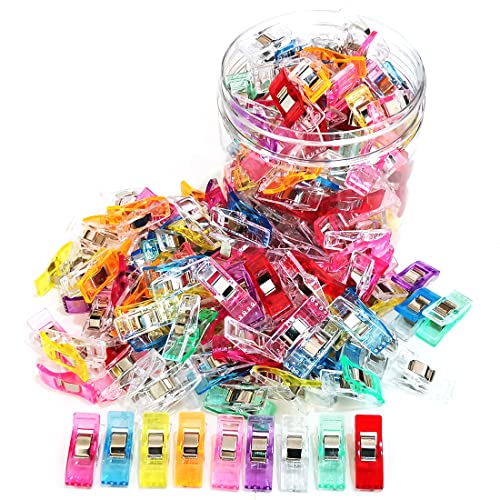
Dritz clips offer a middle-ground solution that works well for the vast majority of knitting projects. They feature a balanced spring tension that is firm enough to hold, yet gentle enough to avoid leaving permanent indentations in your stitches.
I find these particularly useful when blocking or seaming cotton-blend garments. Cotton has very little "memory" compared to wool, so it tends to stretch out of shape if you handle it too much; these clips hold the structure exactly where you place it.
They are an excellent entry-level choice if you are just starting to transition away from pins. They are affordable, widely available, and durable enough to last through dozens of sweater projects.
Singer Multi-Purpose Clips for Precision Joining
Singer clips are designed with versatility in mind, featuring a unique shape that helps guide the edge of your fabric. If you are a knitter who struggles with "stair-stepping" along a seam, these clips can help keep your edge straight.
Their compact profile makes them ideal for smaller projects like baby booties or hats. Because they don’t have the wide footprint of a quilting clip, you can place them closer together to ensure every stitch is perfectly aligned.
The main drawback is that they don’t open quite as wide as other options on this list. If you are working with a very chunky, high-twist yarn, you might find them a bit of a struggle to snap into place. Stick to these for fingering or sport-weight projects.
Bohin Extra-Strong Clips for Heavy Wool Projects

Bohin is renowned for quality, and their extra-strong clips are built to withstand the rigors of heavy-duty knitting. These are the clips you reach for when you are sewing together a heavy coat or a dense, felted project.
The metal spring mechanism is exceptionally robust, ensuring that the clip won’t lose its snap over time. This reliability is crucial when you are working on a large garment that requires multiple sessions to seam; you need to know your alignment will remain untouched overnight.
Because they are so strong, they are not suitable for delicate mohair or lace-weight projects. They are a specialized tool for your heavy-gauge arsenal, ensuring your structural seams stay rock-solid.
Taylor Seville Magic Clips with Soft-Grip Finish
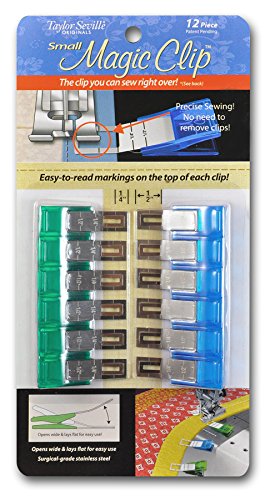
The Taylor Seville Magic Clips stand out because of their specialized soft-touch coating. This finish is specifically designed to protect delicate fibers from being crushed or snagged during the seaming process.
If you are working with luxury fibers like cashmere or angora, these are the only clips I would recommend. The grip is secure, but the surface is forgiving, meaning you don’t have to worry about the clip "biting" into the yarn and causing a halo or a break.
They are slightly more expensive than standard plastic clips, but the investment is worth it for high-end projects. They provide peace of mind when you have spent hundreds of hours on a garment and don’t want to risk damage at the final hurdle.
Hemline Mini Clips for Delicate Lace Seaming

Mini clips are often overlooked, but they are essential for the lace knitter. When you are joining two pieces of intricate lace, you need a clip that is small enough to hold the seam without obscuring the pattern or distorting the delicate eyelets.
These Hemline clips are perfect for pinning down picot edges or decorative borders. They provide just enough tension to keep the fabric from shifting, but they are so light that they won’t pull the weight of the lace out of shape.
Don’t try to use these for heavy sweaters, as they simply aren’t designed for that level of tension. Keep them in your lace-knitting kit specifically for those projects where precision and light weight are paramount.
Why Clips Outperform Pins for Knitted Garments
Pins are problematic for knitters because they rely on piercing the yarn, which can damage the fibers or create unsightly holes. When you pin a seam, you are also creating a single point of stress, which can lead to the "puckering" effect often seen in amateur finishing.
Clips, by contrast, distribute the pressure across a wider surface area. This ensures that the seam remains flat and consistent, mimicking the natural drape of the fabric.
Furthermore, pins are a safety hazard; it is all too easy to lose a pin inside a knitted garment, only to find it later with a sharp poke. Clips are visible, easy to remove, and significantly faster to apply when you are in the flow of a long seaming session.
How to Position Clips to Prevent Edge Distortion
The secret to a perfect seam lies in how you space your clips. Always start by pinning the corners and the center of your seam, then work your way outward to ensure the fabric is evenly distributed.
Avoid pulling or stretching the knitting while you clip. If you stretch the fabric during the seaming process, your garment will end up with a wavy, distorted edge that will never hang correctly, regardless of how well you block it.
If you find that your fabric is "bubbling" between clips, you are likely spacing them too far apart. Add more clips to ensure the edge is fully supported, especially when working with high-elasticity wools that want to snap back into their original shape.
Essential Tips for Achieving Seamless Seam Lines
- Always block your pieces first: Never attempt to seam a garment that hasn’t been blocked to its final dimensions.
- Match your seams stitch-for-stitch: Use the clips to hold the pieces in place, but take your time to align the specific loops of your edge stitches.
- Consider the fiber: Use lighter-tension clips for delicate yarns and high-tension clips for heavy, structured wools.
- Work in good light: Proper lighting allows you to see the V-shape of your stitches clearly, ensuring your needle enters the correct spot every time.
Choosing the right sewing clips is an investment in the longevity and professional finish of your knitted garments. By moving away from pins and adopting a clip-based system tailored to your specific fiber and gauge, you will see an immediate improvement in your seaming results. Experiment with these different styles to find the ones that best suit your personal knitting rhythm. With the right tools and a bit of patience, your seams will eventually become as beautiful as the stitches themselves.