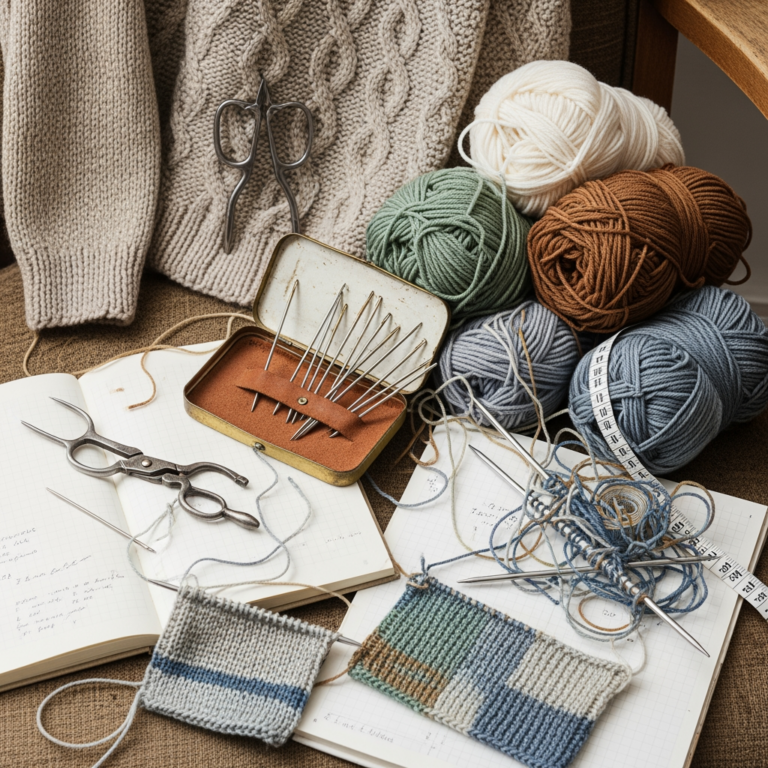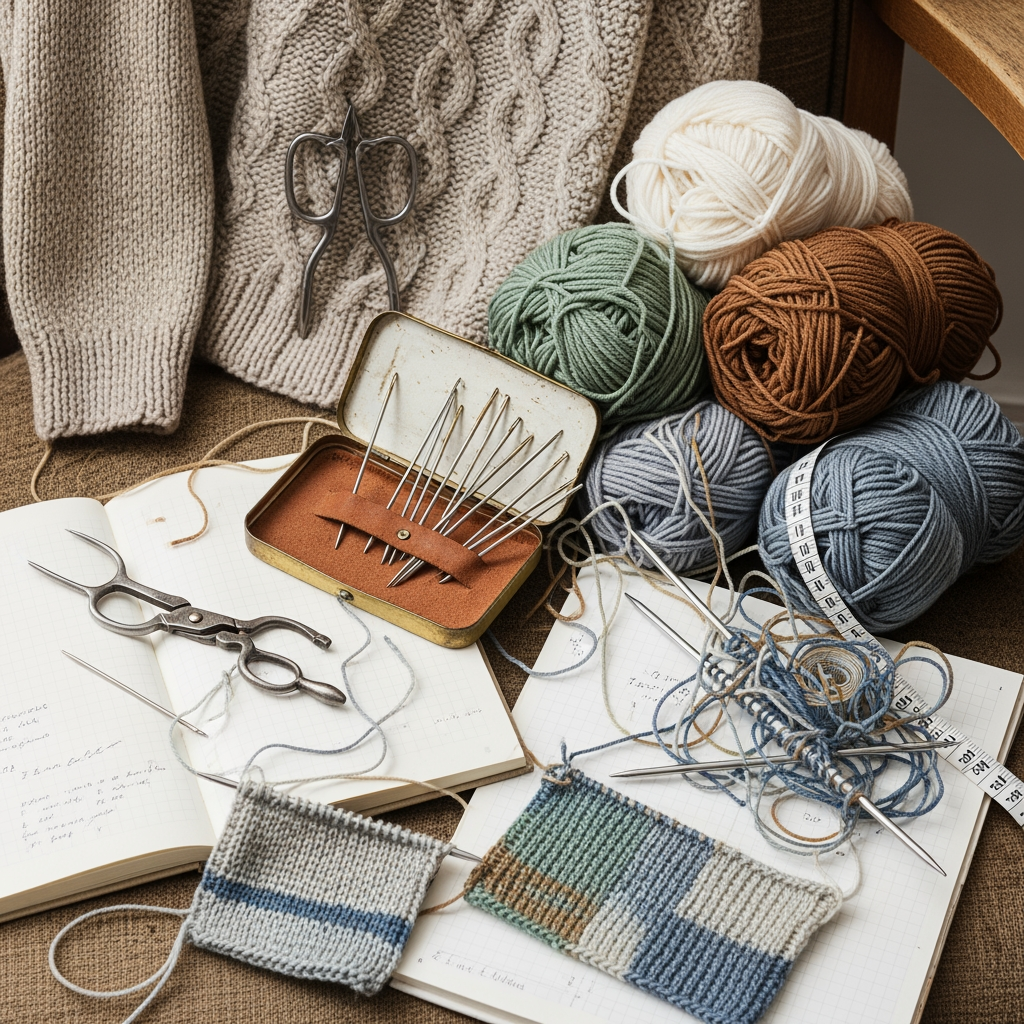
7 Best Large Eye Tapestry Needles For Weaving In Ends
Tired of fraying yarn? We’ve reviewed the 7 best large-eye tapestry needles to help you weave in ends smoothly, securely, and with professional precision.
Finishing a project is the most rewarding part of knitting, yet weaving in ends is the task most makers dread. Using the right tapestry needle can transform this chore from a frustrating struggle into a satisfying final step. A high-quality needle with a large eye and a smooth finish prevents yarn splitting and ensures your hard work stays secure. These seven options represent the industry standards for professional-grade finishing.
Clover Chibi Bent Tip Tapestry Needle Set


The Clover Chibi set is a staple in almost every seasoned knitter’s notions bag. These needles are beloved for their signature bent tips, which allow you to slide under stitches without piercing the fabric itself.
The set comes in a convenient, portable tube that keeps your needles from disappearing into the depths of your project bag. Because they are made of a smooth, flexible plastic, they glide through wool without snagging.
However, they are slightly thicker than metal needles. If you are working with very fine lace-weight yarn, they might feel a bit bulky in your hands.
Dritz Curved Tip Needles for Easy Weaving

Dritz curved needles are an excellent entry point for beginners who struggle with the mechanics of weaving. The gentle arc of the needle mimics the motion of your hand as it navigates through the back of your knitting.
This curve is particularly helpful when working on the inside of a hat or a tubular cowl. You don’t have to contort your wrist to catch the loops on the reverse side of your fabric.
Be aware that these are typically made of nickel-plated steel. If you have a sensitivity to nickel, you may want to look for plastic or aluminum alternatives.
Bohin Extra Large Eye Tapestry Needles

Bohin needles are the gold standard for those who work with chunky, bulky, or roving-style yarns. The eyes on these needles are exceptionally generous, making it easy to thread even the thickest, most unruly wool.
These needles are sturdy and rigid, which is a major advantage when you need to force a needle through a dense, felted, or tight-gauge fabric. They won’t bend or warp under pressure.
Because they are quite long, they provide excellent leverage. If you have limited dexterity in your hands, the length and size of these needles make them much easier to grip.
Susan Bates Finishing Needles with Case

Susan Bates needles are classic, no-nonsense tools that have been around for generations. They are highly reliable, featuring a polished finish that prevents them from catching on delicate fibers like silk or mohair.
The inclusion of a hard-shell case is a small but vital detail. It prevents the needles from poking holes in your knitting bag or getting lost between couch cushions.
These needles are often sold as a multi-pack with various sizes. This is perfect if you frequently switch between different yarn weights, from fingering to worsted.
Knitter’s Pride Wool Needles for Yarn

Knitter’s Pride offers a polished, professional feel that appeals to makers who value tactile quality. These needles are designed specifically to be gentle on animal fibers, which can be prone to pilling if handled with rough tools.
The eyes are designed with a unique shape that holds the yarn flat rather than bunching it up. This makes the transition from the yarn tail to the needle eye seamless.
They are incredibly smooth, which is a double-edged sword. If you are working with a very slick superwash wool or a cotton blend, they may slide out of your hands if you aren’t careful.
Cocoknits Steel Tapestry Needle Assortment

Cocoknits has a reputation for thoughtful design, and their steel needle assortment is no exception. These needles are color-coded, which helps you quickly identify the right gauge for your project without squinting at the eye size.
Because they are made of steel, they are incredibly thin and strong. This makes them ideal for weaving ends into intricate colorwork where space is limited and you don’t want to add extra bulk.
The matte finish is a standout feature. It provides just enough grip so the needle doesn’t fly out of your fingers while you are maneuvering through tight stitches.
Tulip Tapestry Needles with Bent Point
Tulip is a Japanese brand known for its impeccable attention to detail and high-quality manufacturing. Their bent-point needles are arguably the smoothest, most durable needles on the market today.
The tip is tapered to perfection, allowing you to split the "ply" of your yarn if you choose to weave through the center of the stitch for extra security. They feel almost weightless in the hand.
While they are a premium investment, they are unlikely to rust or lose their shape over time. If you treat your tools well, this will likely be the last set of tapestry needles you ever need to buy.
How to Choose the Best Needle for Your Yarn
The golden rule is to match the needle size to the yarn weight. If the needle is too large, it will stretch your stitches and create unsightly gaps in your finished fabric.
- Fingering/Sock Yarn: Use a thin, steel needle with a small eye.
- Worsted/DK Yarn: A medium-sized aluminum or plastic needle works best.
- Bulky/Super Bulky: Use a large-eye plastic or steel needle to accommodate the thick strand.
Always consider the fiber content as well. For sticky, grippy yarns like mohair or unspun wool, a slick metal needle is essential to prevent dragging.
Why Bent Tips Make Weaving Ends Much Easier
The bent tip acts as a guide, helping you navigate the "valleys" between your knitted stitches. By using the bend, you can lift the yarn under the loops without accidentally piercing the yarn itself.
This technique is vital for maintaining the drape of your fabric. If you pierce the yarn, you create a stiff spot where the end was woven in, which ruins the flow of the garment.
Once you master the bent tip, you will find you can weave ends much faster. It eliminates the "poke and pull" method that often leads to messy-looking finishes.
Essential Tips for Securing Your Yarn Tails
Weaving in ends is not just about hiding the tail; it is about locking the yarn so it doesn’t unravel after a few washes. Always weave in the direction of the stitch to maintain the natural elasticity of the fabric.
- The Duplicate Stitch Method: Follow the path of the existing stitches on the back of the work for the most invisible finish.
- Split the Ply: For added security, use your needle to split the strand of the yarn you are weaving into.
- Avoid Knots: Knots create bulk and can eventually work their way to the front of your project.
If you are working with superwash wool, be extra diligent. Superwash fibers are slippery and prone to "creeping" out of the fabric over time, so weave your ends in at least three different directions to lock them in place.
Selecting the right tapestry needle is a small investment that pays off every time you finish a project. By choosing tools that suit your specific yarn weight and project type, you ensure your handiwork remains secure and professional for years to come. Whether you prefer the precision of a bent tip or the strength of steel, there is a perfect needle out there for your kit. Happy weaving, and may your ends always stay tucked away.