6 Best Cotton Twines for Gift Wrapping Worth Trying
Elevate your gift presentation with our top 6 cotton twines. Discover durable, eco-friendly options that add a perfect, rustic touch to any wrapped package.
Elevating a hand-knitted gift starts long before the needles ever touch yarn, beginning with the final presentation that signals the care poured into every stitch. While many reach for synthetic ribbons, cotton twine offers a tactile, organic finish that perfectly complements the natural fibers of a wool or alpaca project. Choosing the right cord is as critical as selecting the correct needle size for your gauge; it dictates how the package feels in the hand and how well the presentation holds up. Here are six cotton twines that deserve a place in your crafting stash for finishing your handmade treasures.
Divine Twine: The Gold Standard for Gift Wrapping


Divine Twine is the industry benchmark for a reason, offering a consistent, high-quality twist that never feels flimsy or prone to fraying. It possesses a certain "memory" that makes it behave similarly to a well-plied wool yarn, holding its shape beautifully when tied into intricate knots.
For the knitter who spends hours perfecting a complex cable pattern, this twine provides a professional, clean aesthetic that doesn’t distract from the texture of the garment. It handles tension exceptionally well, meaning you can pull it taut against a gift box without the fiber snapping or losing its structural integrity.
The only real trade-off is the price point, which is higher than generic craft-store alternatives. However, if you are gifting a labor-intensive heirloom piece, the reliability of Divine Twine is worth the investment to ensure your hard work is presented with equal quality.
Knots & Knits 4-Ply Cotton: Best Eco-Friendly Pick
This 4-ply cotton is a dream for those of us who prefer working with sustainable, unbleached materials. Because it is manufactured with minimal processing, it retains a soft, matte finish that pairs perfectly with earthy, rustic knitting projects like a cabled throw or a heavy wool cardigan.

Because it is a 4-ply construction, it has a lovely, rounded profile that mimics the look of a traditional worsted-weight yarn. This makes it incredibly easy to handle; it doesn’t twist back on itself like single-ply cords, which saves you from the frustration of tangles while you are trying to finish a gift in a hurry.
Keep in mind that because it is eco-friendly and minimally treated, it may show slight variations in thickness. Treat it like a hand-spun yarn—embrace the slight irregularities as part of the charm of a handmade gift.
Hemptique Cotton Twine: Superior Tensile Strength

When you need a twine that won’t snap under pressure, Hemptique’s cotton options are the most robust choice in the bunch. It has a high-density twist that makes it feel much stronger than it looks, similar to the durability of a high-twist sock yarn reinforced with nylon.
This is my go-to choice for heavier packages or when I want to wrap multiple layers of paper around a bulky sweater. The added strength means you can tie a very tight, secure knot that won’t loosen during transport, giving you peace of mind that your gift will arrive as pristine as when you wrapped it.
The trade-off is that it is slightly stiffer than other cotton twines, making it a bit less "drapey" when forming delicate bows. If your priority is security over softness, this is the twine you want on your workbench.
West Coast Gift Wrap Twine: Best Color Variety

If you are a fan of colorwork—like stranded Fair Isle—you know that the right color palette can change the entire mood of a project. West Coast offers a spectrum of hues that allows you to coordinate your wrapping twine with the specific colorway of your knitted gift.
The dye process used here is quite consistent, resulting in vibrant, saturated colors that don’t bleed onto your knitted items. This is vital when wrapping a light-colored project, as you don’t want any dye transfer from the twine to ruin your hard-earned stitches.
Just be aware that these dyed twines can sometimes be slightly more abrasive than natural, unbleached options. Use them for the outer decorative wrap, but avoid pulling them directly against delicate lace or mohair fibers.
Baker’s Dusting Twine: The Classic Rustic Aesthetic
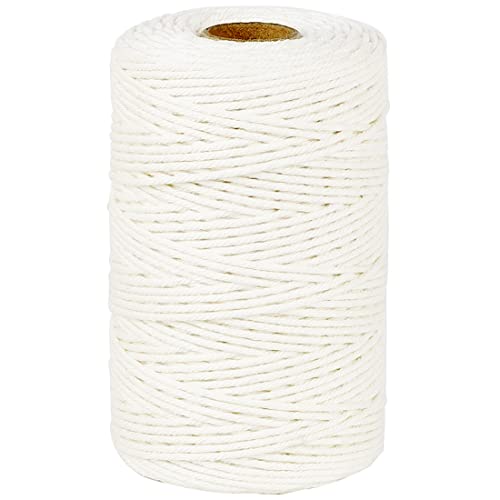
There is something undeniably nostalgic about classic baker’s twine, which brings a vintage, "handmade-in-the-kitchen" feel to any gift. It is typically a thinner gauge, making it ideal for smaller items like a pair of fingerless mittens or a simple knitted headband.
Because it is thin, it is excellent for looping multiple times around a package to create a layered, textured look. It knots securely and holds its position well, which is helpful if you are adding tags or small tokens like a spare knitting needle or a wooden button to the package.
Don’t expect this to hold up heavy, oversized boxes, as its strength is proportional to its delicate diameter. Use it for the finishing touch on lighter items where elegance and charm are the primary goals.
Scotch Brand Cotton Twine: Best Budget-Friendly Buy
Scotch brand twine is the reliable, no-nonsense option you can find at almost any general store, and it does the job perfectly well for everyday gifting. It is a standard, medium-weight cotton that is consistent, easy to find, and affordable enough to use in large quantities.
While it lacks the artisanal flair of the boutique brands, it is a workhorse. If you are prepping a dozen gifts for a holiday exchange, this is the twine that won’t break your budget while still providing a clean, professional look.
The only downside is that it can be a bit more prone to "fuzzing" or pilling than high-twist boutique twines. If you are wrapping a gift that will be handled extensively, keep an eye on the friction points to ensure it stays looking sharp.
Why Fiber Choice Matters for Your Gift Packages
Just as you wouldn’t use a slippery silk yarn for a project meant to be felted, you should consider the material of your twine in relation to the gift. Cotton is the gold standard for wrapping because it is non-stretchy, holds a knot firmly, and has a natural "grip" that prevents it from sliding off smooth wrapping paper.
Avoid synthetic ribbons if you are gifting a natural-fiber knit, as the contrast in textures can look jarring. Natural cotton twine complements the organic, tactile nature of wool, linen, and alpaca, creating a cohesive presentation that feels intentional and curated.
Always test your twine against the wrapping paper surface. If the paper is very glossy, you need a twine with a bit more "tooth" or texture to ensure your bow stays put without needing a dab of adhesive.
How to Select the Right Twine Weight for Projects
Think of twine weight in the same way you think of yarn weight: it is all about scale. A bulky, heavy-gauge twine will overwhelm a delicate, lace-weight shawl, while a thin baker’s twine will look lost on a massive, chunky-knit blanket.
- Fine/Thin: Best for small accessories, tags, and delicate paper wraps.
- Medium/Standard: The versatile choice for most sweaters, scarves, and medium-sized boxes.
- Heavy/Multi-Ply: Essential for large, heavy items or when you want the twine to be a major visual feature.
If you are unsure, err on the side of a medium-weight twine. It is the most forgiving option and provides enough structure to hold a secure knot without looking out of proportion to your beautiful handiwork.
Creative Ways to Use Cotton Twine in Fiber Arts
Cotton twine doesn’t have to be retired once the gift is opened; it is an incredibly useful tool for the knitter’s kit. I often use leftover lengths for provisional cast-ons, as the non-stretchy nature of cotton makes it much easier to pick up stitches later than a bouncy wool yarn.
You can also use it for blocking small, intricate items like lace motifs or crochet squares. Because it is colorfast and won’t stretch, it serves as a sturdy guide for pinning out your work to the correct dimensions before the final steam or wet block.
Keep a stash of different colors in your project bag to use as makeshift stitch markers or to bundle together sets of double-pointed needles. It is a multi-purpose fiber that proves its worth long after the wrapping paper has been recycled.

Essential Tips for Securing Perfect Gift Bows
The secret to a perfect bow lies in the tension you apply while tying, much like maintaining even gauge while knitting. Start by ensuring your twine is not twisted as it comes off the spool; if it has a "kink," it will fight you when you try to form your loops.
To get a bow that stays upright, tie your initial knot firmly, then form your loops and pull them gently in opposite directions. If you find the twine is too slippery, a tiny, barely-visible knot at the base of the bow will keep everything locked in place.
Finally, trim your ends at an angle to prevent fraying, or knot the very tips if you want a more decorative, finished look. A well-tied bow is the final stitch in your project, and taking an extra thirty seconds to secure it properly ensures your gift looks as professional as the knitting inside.
Selecting the right cotton twine is the final, thoughtful step in the journey of a handmade gift. By matching the weight, texture, and color of your twine to the personality of your knitted piece, you create a complete, professional experience for the recipient. Remember that the best tools are the ones that make your process easier and your results more beautiful. May your gifts be as secure and stunning as the stitches you have poured your heart into.