6 Best Seam Gauges For Measuring Stitch Length
Finding the right seam gauge is vital for precision. We review the 6 best tools to help you master consistent stitch lengths and improve your sewing quality.
Achieving the perfect fit in a hand-knit garment starts long before you pick up your needles; it begins with understanding your personal stitch gauge. A reliable seam or needle gauge is the most fundamental tool for ensuring your tension matches the pattern’s requirements. Without an accurate measurement, even the most expensive yarn can result in a sweater that is either a tent or a tourniquet. These six tools represent the gold standard for measuring your progress and verifying your equipment.
Clover Knitting Stitch Gauge: Best for Beginners


If you are just starting your knitting journey, the Clover Knitting Stitch Gauge is likely the first tool you will encounter. It is a simple, no-nonsense plastic card that combines a needle sizer with a small ruler for checking stitches per inch.
The beauty of this tool lies in its simplicity and accessibility. It takes the guesswork out of identifying your needle size, especially when the markings on your needles have rubbed off after a few projects.
However, keep in mind that plastic can warp over time if left in a hot car or near a heater. For a beginner, it is an affordable, low-stakes entry point into the world of precision knitting.
ChiaoGoo 6-Inch Needle Gauge: Most Durable Tool
When you spend hours working on intricate lace or dense colorwork, you need a tool that won’t flex or break in your project bag. The ChiaoGoo 6-inch gauge is crafted from sturdy metal, making it virtually indestructible compared to its plastic counterparts.

This gauge is particularly useful for measuring needles that have seen heavy use. Because it is rigid, you get a consistent "click" when the needle sits perfectly in the hole, ensuring there is no room for human error.
The trade-off here is weight and potential snagging. While it is incredibly durable, it is heavier than plastic and can catch on delicate mohair fibers if you aren’t careful when rummaging through your notions pouch.

Susan Bates Knit Chek: The Classic Budget Choice
The Susan Bates Knit Chek is a staple in almost every seasoned knitter’s collection for a reason. It is a multi-functional tool that measures needle size, stitch gauge, and even includes a built-in yarn cutter.
Many knitters appreciate that it consolidates several tools into one flat, lightweight aluminum strip. It is the perfect size to slip into a needle case or a small tin of stitch markers.
The downside is that the markings are printed rather than etched, meaning they can fade after years of heavy friction. It is a classic for a reason, but treat it as a reliable workhorse rather than a lifetime heirloom.
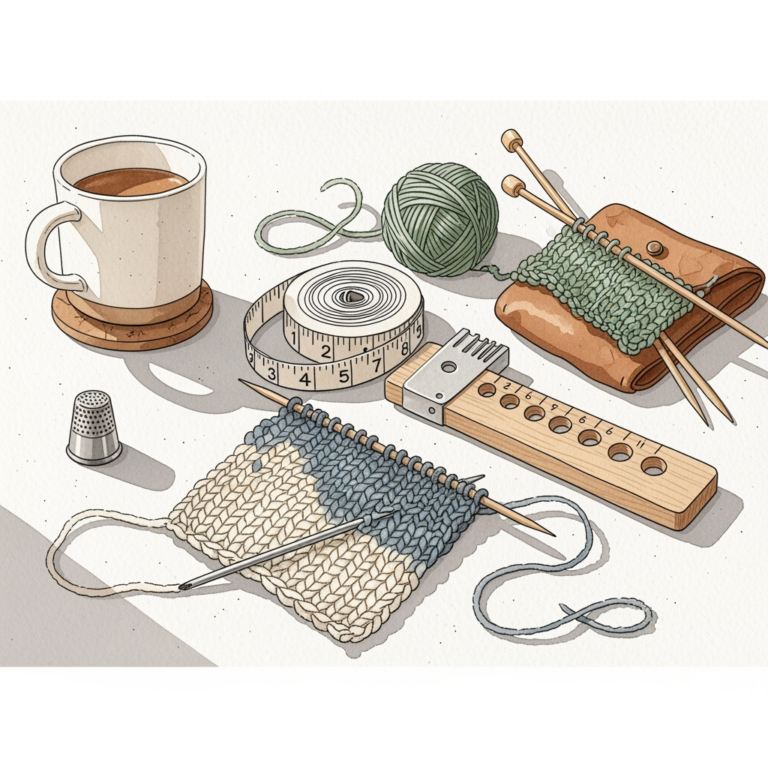
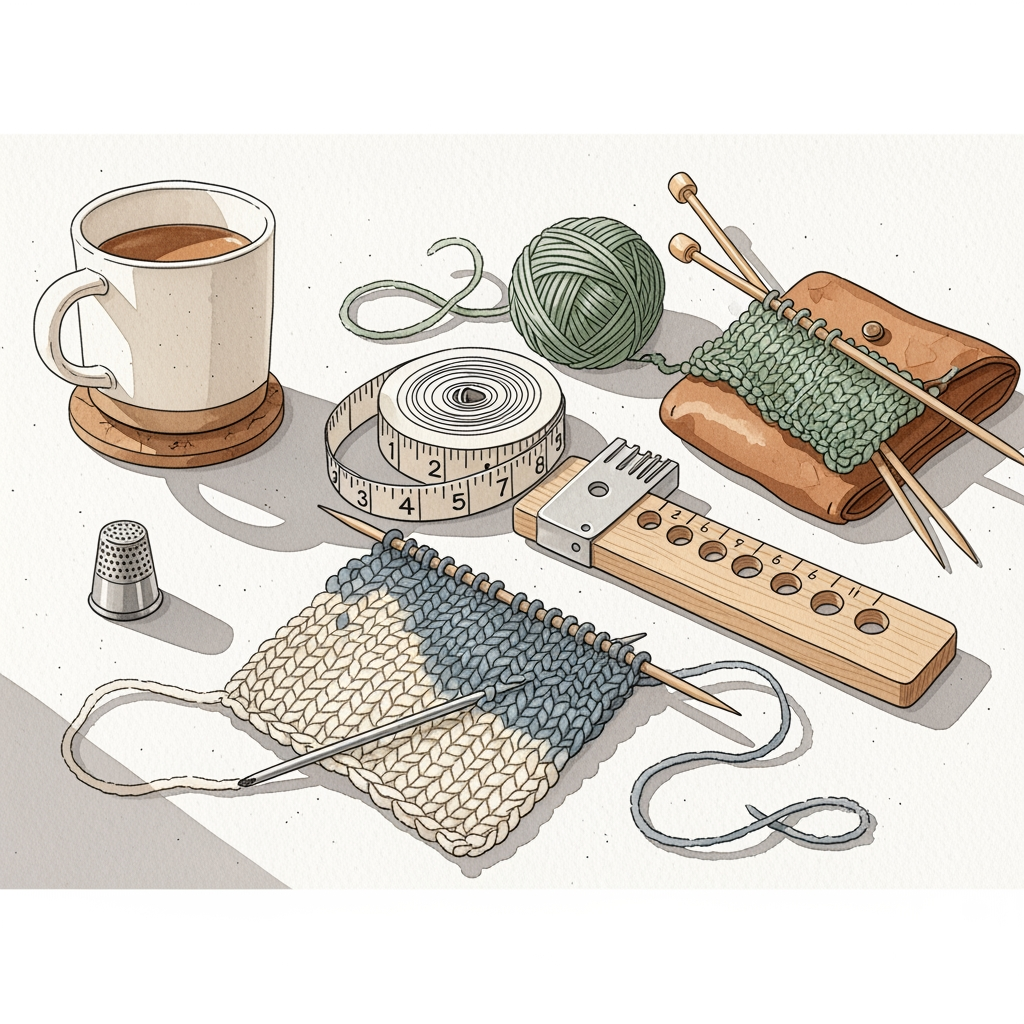
Katrinkles Wooden Gauge: Best for Natural Fibers
If you prefer the tactile experience of working with wool and wood, a Katrinkles gauge is a beautiful addition to your kit. These are laser-cut from sustainable woods, offering a warm, grippy texture that feels great in the hand.
Unlike metal or plastic, wood is gentle on your needles and won’t cause any scratching or finish degradation. It is an excellent choice for knitters who primarily work with luxury fibers and want to avoid the "clinking" sound of metal tools.
Be aware that wood is a natural material and can be sensitive to humidity changes. Always store these in a dry place to prevent warping, and avoid using them with extremely sharp or abrasive needles that might splinter the wood.
Cocoknits Maker’s Keep: The Most Versatile Gauge
The Cocoknits Maker’s Keep is less of a simple gauge and more of a comprehensive project management system. It features a magnetic slap-bracelet that holds your needle gauge, stitch markers, and tapestry needles right on your wrist.
This is a game-changer for knitters who move around frequently or work on complex patterns where you need to verify your needle size mid-row. Having your tools attached to you means you spend less time searching for a lost gauge under the couch cushions.
The primary tradeoff is the learning curve and the cost. It is a significant investment compared to a basic plastic card, but for the dedicated maker, the efficiency gain is undeniable.
Addi Needle Gauge: Precision for Metric Sizes

For those who frequently order patterns from international designers, the Addi Needle Gauge is indispensable. It provides highly accurate metric sizing, which is the standard for European needles and yarns.
Many US-based knitters struggle with the conversion between US sizes and millimeters; this tool eliminates that mental math entirely. It is particularly helpful if you use a mix of brands, as some needle manufacturers have slight variances in their sizing standards.
Because it is designed with German engineering precision, the holes are calibrated to exact tolerances. If you find your gauge is consistently "off" despite using the correct needle size, this tool will help you identify if your needles are truly the size they claim to be.
Why Accurate Stitch Gauges Matter for Your Fit
Stitch gauge is the mathematical foundation of your garment. If a pattern calls for 20 stitches over 4 inches and you are knitting at 18 stitches, your finished sweater will be significantly larger than intended.
Measuring your gauge over a 4-inch square is the industry standard because it accounts for the natural tension variation that occurs within a single row. Always block your swatch before measuring, as fibers like wool or alpaca can expand or contract significantly once wet.
Don’t rely on the gauge listed on the yarn ball band as a substitute for your own swatch. Your personal tension is unique, and it will change depending on your mood, the needle material, and the specific stitch pattern you are using.
Understanding Imperial vs Metric Needle Sizing
The knitting world is divided between Imperial (US) and Metric (mm) sizing, which often leads to confusion. While a US size 8 is generally 5.0mm, some brands have slight variations that can throw off your final fabric density.
Always prioritize the metric measurement when working from a pattern, as it is the universal language of knitting. If you are working with vintage needles, be aware that sizing standards have shifted over the decades, making a physical gauge essential.
When in doubt, use your gauge to test the fit of your needle tip. If a needle slides through a hole with too much "wiggle room," it is likely too small for the project, regardless of what the stamp on the needle says.
How to Measure Your Tension for Better Results
To get an honest measurement, lay your knitted swatch flat on a hard surface without stretching it. Place your gauge over the center of the swatch, avoiding the edges where stitches often pull or distort.
Count your stitches and rows carefully, using a pin to mark the start and end of your 4-inch section. If you are knitting in the round, make sure your swatch is also worked in the round to accurately reflect how your tension behaves without purling.
If you find your gauge is too loose, try dropping down a needle size or using a more "grippy" material like wood or bamboo. Conversely, if your fabric is too stiff, move up a needle size and switch to a slicker needle like nickel or brass.
Maintaining Your Tools for Long-Term Accuracy
Even the best gauge will fail if it is bent, cracked, or covered in grime. Keep your tools clean by wiping them down with a soft cloth after each project to remove residual lanolin or hand oils.
Store your gauges in a dedicated notions case rather than loose in a bag to prevent the edges of the holes from becoming nicked. A nicked hole can give you a false reading, leading you to believe your needle is smaller or larger than it actually is.
Check your gauges for signs of wear annually. If the markings have become illegible or the holes are no longer perfectly round, it is time to replace the tool to ensure your future projects remain consistent and well-fitting.
Investing in a quality seam gauge is a small price to pay for the peace of mind that comes with knowing your project will fit perfectly. Whether you prefer the durability of metal or the warmth of wood, the best tool is the one you keep within reach. Take the time to measure your gauge, trust your tools, and enjoy the process of creating something that fits your body exactly as it should. Happy knitting!