7 Best Acid Dyes For Wool Yarn Saturation Tested
Discover the top 7 acid dyes for wool yarn. Our expert testing reveals which brands offer the best color saturation and lasting vibrancy for your projects.
Transforming a skein of undyed wool into a bespoke colorway is one of the most rewarding milestones for any knitter. Whether you are aiming for deep, moody tonals for a cabled sweater or vibrant pops for a pair of socks, the dye you choose dictates your success. Not all acid dyes behave the same way, and understanding their chemistry is the key to achieving professional results at home. This guide breaks down the top seven dyes on the market to help you match your project goals with the right pigment.
Jacquard Acid Dyes: Best Professional Choice


If you have ever admired the complex, layered depth of hand-dyed indie yarn, you have likely encountered the results of Jacquard dyes. These are the industry standard for a reason: they are highly concentrated and offer a massive spectrum of colors.
For a knitter planning a large-scale project, like a fingering-weight shawl, consistency is everything. Jacquard dyes strike the perfect balance between ease of use and professional-grade saturation. They exhaust well, meaning the dye bonds completely to the fiber, leaving your dyebath clear and your yarn colorfast.
The tradeoff here is the learning curve regarding color mixing. Because these dyes are potent, a tiny amount goes a long way, and it is easy to accidentally over-saturate your yarn if you aren’t measuring precisely. Keep a notebook of your formulas; once you find that perfect "midnight blue" or "forest moss," you will want to replicate it exactly.
Dharma Trading Co. Acid Dyes: Top Color Range

Dharma Trading Co. offers arguably the most extensive color palette available to home dyers. If you are trying to match a specific shade for a stranded colorwork project where you need a very particular transition, this is your best starting point.
These dyes are known for their excellent solubility, which prevents those dreaded "speckles" of undissolved powder from ruining your yarn. When you are dyeing a delicate lace-weight silk-mohair blend, you want a dye that disperses instantly. Dharma’s pigments integrate smoothly into the fiber, ensuring an even tone across the entire skein.
The sheer volume of options can be overwhelming for a beginner. My advice is to start with their primary colors and learn to mix your own palette before buying twenty different jars. It saves money and teaches you a deeper understanding of color theory that will improve your colorwork design choices.
Lanaset Acid Dyes: Best for Colorfast Results
Lanaset dyes are in a league of their own when it comes to durability. If you are dyeing yarn for a high-wear project, like a pair of wool-nylon blend socks that will see heavy friction, these dyes are the gold standard.
These dyes require a slightly more complex process involving a specific leveling agent, but the payoff is incredible wash-fastness. Unlike standard acid dyes that might bleed slightly in the first wash, Lanaset bonds aggressively to the protein fiber. This means your hard work won’t fade after a few trips through the laundry.
While they are more expensive and require more precise pH management, they are worth the investment for heirloom-quality garments. Don’t skip the technical steps here; treat this like a precise knitting pattern where gauge matters.
Ashford Acid Dyes: Easiest for Beginners

Ashford dyes are designed for the hobbyist who wants immediate, beautiful results without needing a chemistry degree. They come in small, pre-measured pots, which removes the anxiety of weighing out tiny amounts of powder.
For a knitter who just wants to dye a single skein of yarn to match a specific project, these are incredibly user-friendly. They are formulated to be safe and simple, making them perfect for dyeing in a kitchen setting. You can achieve vibrant, solid colors with very little effort.
The downside is that the color range is more limited compared to professional lines. If you are looking for subtle, nuanced, or "dusty" colors, you may find yourself having to mix and match colors extensively. They are the perfect entry point, but you might outgrow them as your dyeing skills sharpen.
Country Classics Dyes: Best for Soft Pastels

If your aesthetic leans toward soft, vintage-inspired palettes, Country Classics is a fantastic choice. These dyes are formulated to be gentle, making them ideal for achieving those dreamy, muted pastels that are so popular in modern knitting.
It is often harder to get a "clean" pastel than a deep, saturated color. These dyes don’t fight the fiber, allowing for a soft, even penetration that doesn’t look harsh or "chemically." They are perfect for dyeing baby blankets or delicate, lightweight garments.
Because they are less aggressive, they may not be the best choice if you are aiming for a deep, dark black or a highly saturated navy. If you try to push them too far, you might end up with a muddy tone rather than a rich one. Stick to their strengths and enjoy the soft, ethereal results.
ProChem WashFast Dyes: Superior Saturation
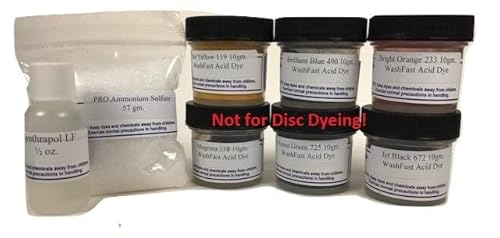
ProChem is a favorite among professional indie dyers who demand high-intensity results. If you are looking for that "electric" neon or a deep, saturated red that doesn’t look washed out, this is the brand to reach for.
These dyes are incredibly potent and offer superior light-fastness. If you are knitting a sweater that will be worn in the sun, you want a dye that won’t lose its luster over time. The saturation levels you can achieve with ProChem are significantly higher than most consumer-grade dyes.
Because they are so concentrated, they require a bit more caution during the prep phase. Always wear a mask and work in a well-ventilated area, as the fine powder can be easily inhaled. Treat these like the professional tools they are, and your yarn will look like it came straight from a luxury boutique.
Rit All-Purpose Dye: Accessible Budget Option

You will find Rit in almost every craft store, and while it is technically an "all-purpose" dye, it can be used on wool if you follow specific protocols. It is not a true acid dye, but it is an accessible, low-cost way to experiment with color.
The biggest challenge with Rit is that it is formulated for a wide range of fibers, meaning it doesn’t always bond as strongly to wool as a dedicated acid dye. You may find that your colors bleed during the final rinse or lose intensity over time. It is a great way to "play" with color, but perhaps not the best choice for a project you intend to keep for a decade.
If you are just testing out a color theory or dyeing a swatch to see how a color interacts with a specific yarn base, Rit is a fine, low-stakes choice. Just don’t expect the same level of colorfastness or vibrancy as you would get from a specialized protein dye.
How to Properly Prep Wool Yarn for Acid Dyeing
Preparation is the most overlooked step in the dyeing process. Before you even touch the dye, your yarn must be clean and thoroughly wetted. Any residual spinning oils or dirt will act as a barrier to the dye, leading to patchy, uneven results.
- Scouring: Soak your yarn in warm water with a small amount of pH-neutral dish soap for at least 30 minutes.
- Rinsing: Rinse until the water is completely clear and no soap bubbles remain.
- Wetting: Ensure the yarn is fully saturated with water before entering the dyebath; trapped air bubbles will cause white spots.
Remember, yarn is a sponge. If it isn’t uniformly wet before it hits the dye, the color will be absorbed unevenly. Take your time during this phase; it is the foundation of a successful dye job.
Essential Safety Gear for Working With Acid Dyes
While dyeing is a fun creative outlet, you are working with chemical powders that require respect. Safety isn’t just about avoiding spills; it’s about protecting your respiratory system from fine particles.
- N95 Mask: Always wear a mask when handling dry dye powder to avoid inhalation.
- Gloves: Use nitrile gloves to prevent staining your skin and to keep oils from your hands off the yarn.
- Dedicated Tools: Never use your dyeing pots or spoons for food preparation; keep your fiber arts tools strictly separate.
Think of your dye space like a chemistry lab. Keep your workspace organized, clear of clutter, and always ensure you have proper ventilation. It is a small investment in gear that makes the entire process safer and more enjoyable.
Troubleshooting Common Uneven Dyeing Challenges
If your yarn comes out with unwanted streaks or white patches, don’t panic. Uneven dyeing is almost always caused by the dye striking too quickly or the yarn not being evenly saturated.
If your dye strikes too fast, try adding your dye in stages rather than all at once. If you are getting white spots, it usually means the yarn was too crowded in the pot or the water wasn’t circulating enough. Use a larger pot than you think you need; the yarn should be able to move freely in the bath.
Lastly, check your pH. Acid dyes need an acidic environment to bond properly—usually a splash of white vinegar or citric acid. If the water isn’t acidic enough, the dye won’t exhaust, and you’ll end up with a pale, uneven mess. Adjusting your pH is the secret trick to consistent, professional-looking yarn.
Mastering the art of acid dyeing allows you to take complete control over your knitting projects, from the fiber content to the final hue. By selecting the right dye for your specific needs and respecting the chemistry involved, you can create yarn that is uniquely your own. Start with a small, manageable batch, keep careful notes of your process, and don’t be afraid of a little experimentation. Your perfect colorway is just one dyebath away.