7 Best Interchangeable Cables For Long Circulars
Find the perfect fit for your knitting projects. We review 7 top interchangeable cables, highlighting durability, flexibility, and seamless needle joins.
Choosing the right interchangeable cable is just as critical as selecting the perfect yarn for your project. A stiff, kinking cord can turn a relaxing evening of knitting into a frustrating battle against your own tools. These seven options represent the best in the industry, each offering unique benefits for different knitting styles and fiber types. Finding the right match will transform your workflow and help you maintain consistent tension across long circular projects.
ChiaoGoo Red Twist Cables: The Gold Standard


If you have spent any time in a knitting circle, you have heard the praise for ChiaoGoo’s steel-core cables. They are constructed with a multi-strand steel cable coated in nylon, which provides an unmatched combination of strength and drape.
The beauty of these cables lies in their lack of memory, meaning they never hold a coiled shape after being pulled from your project bag. They lay flat immediately, which is a lifesaver when you are working on a large blanket or a wide shawl where cord drag can affect your gauge.
The tradeoff here is the slight stiffness compared to thinner, plastic-only cords. However, for most knitters, the reliability of the join and the durability of the steel core far outweigh the minor weight difference.
HiyaHiya Steel Interchangeable Cables: Best Memory

HiyaHiya cables are remarkably thin and flexible, making them a favorite for knitters who prefer a "barely there" feel. They are exceptionally pliable, allowing you to manipulate the cord easily even when knitting in tight spaces like the armscye of a sweater.
Because they are so soft, they have almost zero resistance against the fabric. If you are working with delicate lace or a sticky wool that tends to catch on joints, the smooth transition provided by these cables is a significant asset.
Be aware that because they are so thin, they can sometimes feel a bit "whippy" if you are a very fast knitter. They are excellent for magic loop knitting because they don’t fight against your hands during the transition between needle tips.
KnitPicks Options Cables: Best Value Selection

KnitPicks cables are the workhorse of the knitting world, offering a reliable, functional experience at a price point that allows you to build a massive collection. They are made of a clear, flexible plastic that is sturdy enough for everyday use.
These cables are perfect for the knitter who is just starting to build their interchangeable set and doesn’t want to break the bank. They are lightweight and have enough "give" to be comfortable for long sessions of stockinette stitch.
The primary tradeoff is that they can develop a slight "memory" over time, especially if stored tightly in a bag for months. A quick soak in warm water usually resets the plastic, making them as good as new.
Lykke Interchangeable Cords: Best Aesthetic Choice

Lykke cords are designed to be as beautiful as the handcrafted needles they accompany. They are incredibly soft and flexible, providing a luxurious feel that matches the high-quality aesthetic of their birch wood needle sets.
These cords are ideal for knitters who prioritize comfort and tactile pleasure. They drape beautifully, which is essential when working with heavy, drape-heavy fibers like alpaca or silk blends that might otherwise pull on your hands.
Because they are so soft, they are not the most durable option for heavy-duty, high-tension knitting. Treat them with care, and they will reward you with a smooth, snag-free experience on your most precious projects.
Addi-Click SOS Cables: Best for Dropped Stitches

The Addi-Click SOS cable is a genius invention for anyone who fears the dreaded dropped stitch in lace or complex cable patterns. These cables feature a tiny hole near the join, allowing you to thread a lifeline through your work as you knit.
If you make a mistake, you can simply rip back to your lifeline without losing your stitches. This feature is a game-changer for intricate projects where a single dropped stitch could ruin hours of work.
The "Click" mechanism is unique, requiring a push-and-twist motion rather than a screw-in thread. It is incredibly secure, but ensure you hear that audible click to guarantee the needle is locked in place before you start your row.
Seeknit Koshitsu Cables: Best Sustainable Option

Seeknit cables are crafted with the same attention to detail as their famous Japanese bamboo needles. They are made from high-quality, treated bamboo and natural materials, making them the top choice for the eco-conscious knitter.
These cables are exceptionally lightweight, which reduces wrist fatigue during marathon knitting sessions. They have a natural, organic feel that many knitters find more comfortable than plastic or steel alternatives.
Because they are made of natural materials, they do require a bit more maintenance. Avoid subjecting them to extreme temperature changes, which can cause the material to become brittle over time.
Knitter’s Pride Mindful Cables: Best Flexibility
The Mindful Collection cables are designed specifically for the meditative nature of knitting. They are made from a smooth, coated steel that is exceptionally flexible, allowing for a seamless transition from the cord to the needle tip.
These cables are color-coded by length, which is a thoughtful touch for knitters who have a large stash of needles. It takes the guesswork out of finding the right cord for your circular project.
They provide a perfect balance between the rigid strength of ChiaoGoo and the extreme softness of HiyaHiya. They are a reliable, "do-it-all" cable that performs well across a wide variety of yarn weights and project types.
How to Choose the Right Cable Length for Projects
- For Hats: Use a 16-inch or 24-inch cable to maintain a tight circle without excessive stretching.
- For Sweaters: A 32-inch or 40-inch cable is usually ideal to hold the full circumference of the body comfortably.
- For Blankets: Opt for a 48-inch or 60-inch cable to ensure the weight of the project rests on the cord rather than your hands.
Always remember that the length of the cable plus the length of your needle tips equals the total circular length. If your pattern calls for a 24-inch circular, you need a 16-inch cable combined with two 4-inch tips.
Understanding Memory and Kink Resistance in Cords
Memory refers to the tendency of a cable to retain the shape of its packaging. A cable with "high memory" will stay curled, which can cause the cord to pull at your work and create uneven tension.
Kink resistance is the ability of the cable to remain smooth under stress. When a cable kinks, it creates a sharp bend that can snag your yarn or impede the movement of stitches.
Look for cables that are advertised as "swivel" or "memory-free." These are engineered to rotate at the join, which prevents the cord from twisting while you work and keeps your knitting flowing smoothly.
Essential Tips for Maintaining Your Cable Joints
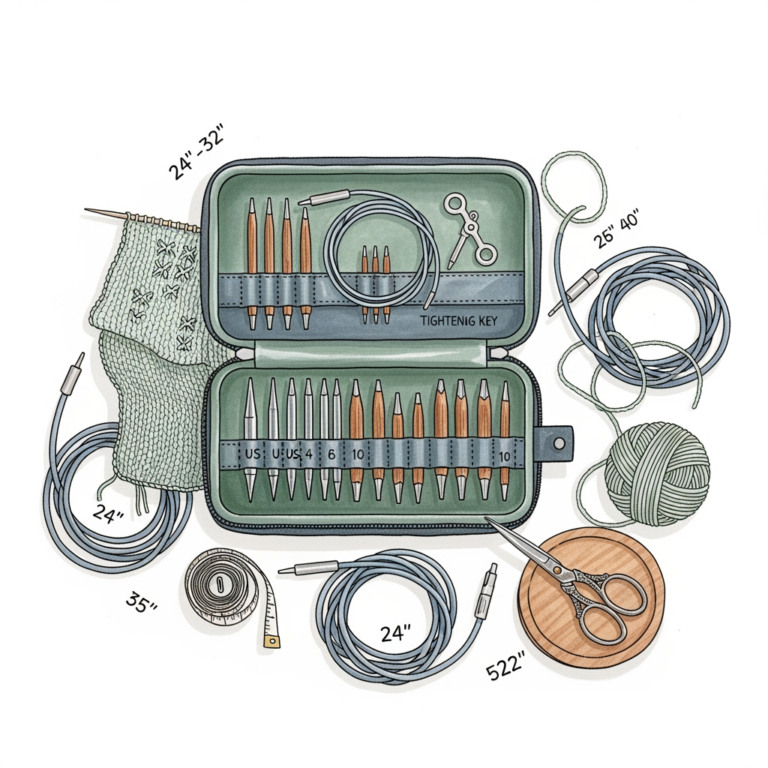
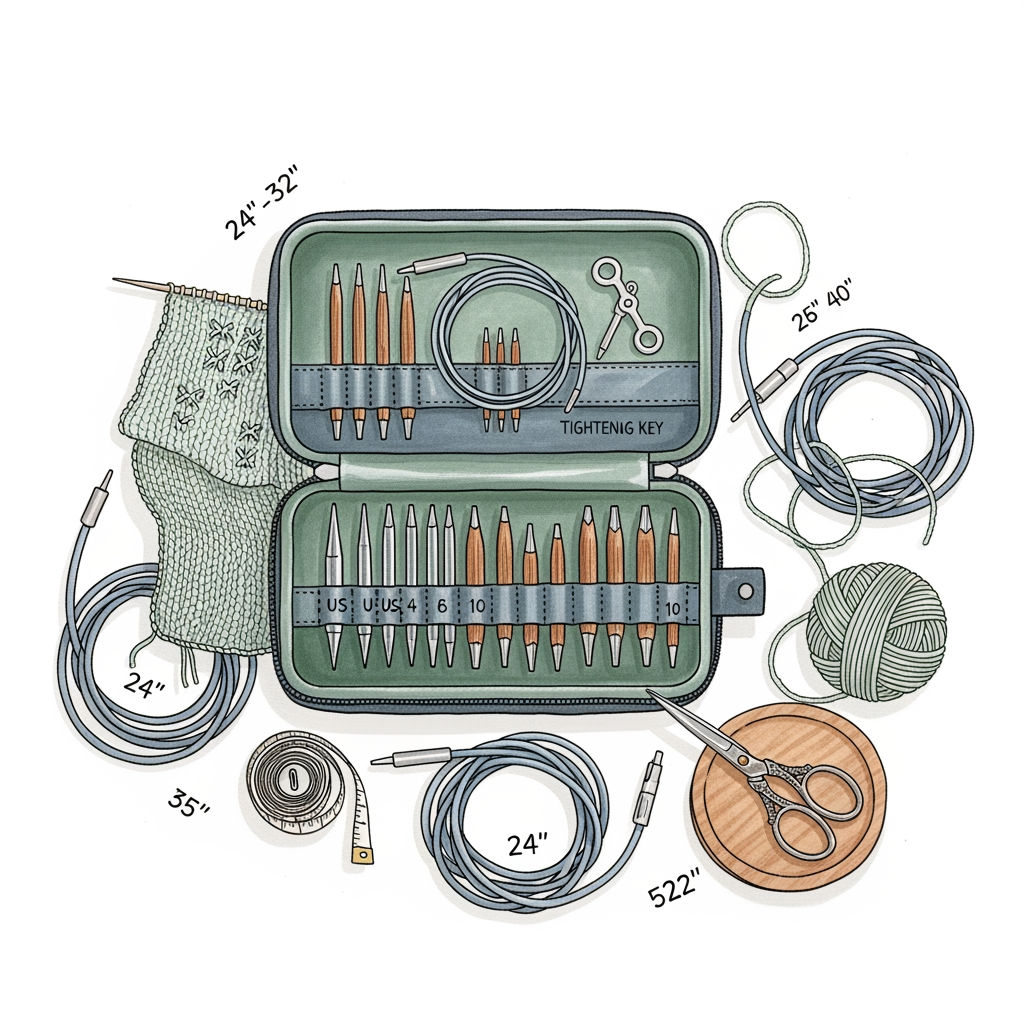
- Tighten with a tool: Never rely on hand-tightening alone; use the provided key or gripper to ensure the join is flush.
- Check periodically: Stop every few inches to ensure your needle hasn’t begun to unscrew, especially when working with slippery fibers like silk or bamboo.
- Clean the threads: A tiny bit of lint can prevent a tight seal; use a soft toothbrush to gently clear the threads on your needle tips occasionally.
- Store flat: Whenever possible, store your cables in a flat case rather than coiled tightly in a small bag to preserve their integrity.
Investing in high-quality interchangeable cables is an investment in your own comfort and the longevity of your hand-knit garments. By understanding the nuances of memory, flexibility, and join security, you can ensure that your tools never stand in the way of your creativity. Choose the cable that fits your specific project needs, and you will find that the rhythm of your knitting becomes significantly more fluid. Happy making, and may your joins always remain smooth and secure.