6 Best Swift Winders For Hank Management To Try
Organizing yarn hanks is effortless with the right tools. Discover our top six swift winders designed to improve efficiency and keep your fiber stash tidy.
Transforming a tangled hank of hand-dyed wool into a neat, center-pull cake is one of the most satisfying rituals in a knitter’s life. Without the right equipment, however, this process can quickly devolve into a frustrating afternoon of battling stubborn knots. Investing in a reliable swift and winder system is the single best way to protect your yarn investment and keep your creative momentum flowing. This guide breaks down the essential tools to help you streamline your prep work and get straight to the knitting.
Stanwood Needlecraft Large Metal Yarn Ball Winder


This is the workhorse of the fiber arts world, designed for those who frequently work with bulky yarns or large, 100-gram skeins. Its heavy-duty metal gears provide a level of durability that plastic alternatives simply cannot match over time.
If you are a frequent buyer of luxury hand-dyed yarns, the smooth operation of this winder ensures you won’t lose tension or cause unnecessary stretching. The metal construction handles the resistance of heavier fibers like worsted-weight wool or cotton blends with ease.
The trade-off here is the initial investment and the physical footprint on your craft table. However, if you are tired of your winder skipping gears or wobbling during a high-speed wind, this unit is the gold standard for long-term reliability.
KnitPicks Ball Winder: The Best Budget Selection
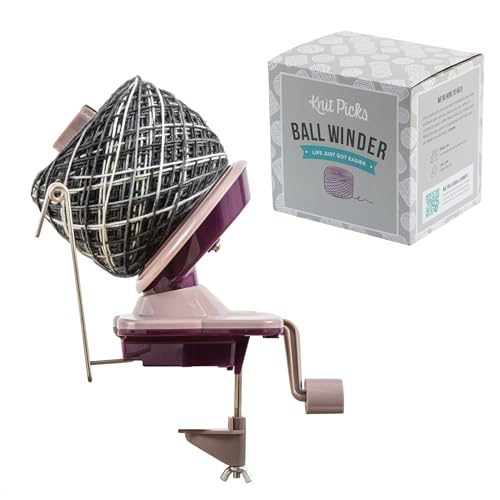
For the knitter who is just beginning to build their stash or who only occasionally works from hanks, this winder is an incredibly practical entry point. It is lightweight, portable, and gets the job done without requiring a massive budget.
While it lacks the heavy-duty metal internals of higher-end models, it functions perfectly for standard sock yarns and fingering-weight fibers. It is a fantastic choice for those with limited space who need to tuck their tools away in a drawer between projects.
Keep in mind that this unit performs best when you don’t rush the process. If you try to wind at breakneck speeds, the plastic gears can occasionally slip, so maintain a steady, moderate pace to ensure a perfectly shaped cake.
Nancy’s Knit Knacks Heavy Duty Amish Yarn Swift

The Amish-style swift is a brilliant, non-mechanical solution that relies on simplicity and friction-free rotation. Because it doesn’t have the complex moving parts of an umbrella swift, there is virtually nothing that can break or jam.
This design is particularly excellent for those who find umbrella swifts intimidating or difficult to store. It breaks down into flat pieces, making it a dream for knitters who attend retreats or travel to knitting groups.
One minor consideration is that it requires a bit more "tuning" to ensure the pegs are set to the correct diameter of your skein. Once set, however, it offers a remarkably smooth, quiet experience that won’t distract you from your favorite podcast.
Lacis Wooden Umbrella Swift for Skein Management

There is an undeniable aesthetic appeal to a classic wooden umbrella swift, but its true value lies in its superior balance and rotation. The craftsmanship in these units often allows for a much smoother spin, which is critical when handling delicate lace-weight fibers that snap under sudden tension.
Because it is made of wood, it feels substantial and stable on a tabletop. It is the preferred choice for knitters who appreciate traditional tools that are built to last for decades if treated with proper care.
Be aware that wooden swifts can be sensitive to humidity, which might occasionally cause the wood to expand or contract. A light touch of wax on the joints keeps it moving like butter, ensuring your yarn never catches or snags during the transition.
Stanwood Tabletop Swift: Best for Large Skeins

When you are dealing with massive 200-gram skeins of rustic wool, you need a swift that won’t tip over or collapse under the weight. This tabletop model is engineered specifically to handle the tension and bulk that smaller, flimsy swifts often struggle to manage.
The stability of this unit allows you to wind with confidence, knowing the swift won’t "walk" across your table as you work. It is an essential tool for those who knit sweaters in one piece and prefer to wind their entire yarn supply at once.
While it is larger than most, the peace of mind it provides is worth the extra table real estate. If you often find yourself fighting with your swift because the skein is too heavy, this is the upgrade you have been waiting for.
ChiaoGoo Yarn Swift: Compact and Efficient Design
ChiaoGoo is well-known for their precision needle manufacturing, and they bring that same attention to detail to their yarn storage tools. This swift is designed for the modern knitter who values efficiency and a small, unobtrusive footprint.
It excels in situations where you are working with multiple small hanks of contrasting colors for stranded colorwork projects. It is quick to set up, easy to adjust, and holds the yarn with just enough tension to prevent tangles without stretching the fibers.
This is the "grab and go" option for the knitter who wants high performance without the bulk of a large wooden or metal assembly. It is a sleek, reliable piece of equipment that fits seamlessly into a modern craft room.
Understanding the Difference: Swifts vs. Ball Winders
It is common for beginners to confuse these two, but they serve entirely different purposes in your workflow. A swift is designed to hold the loose loop of a hank (the skein) so it can rotate freely as you pull the yarn.
A ball winder, by contrast, is the mechanical device that takes that loose yarn and pulls it into a tight, center-pull cake. You cannot effectively wind a hank without a swift, and you cannot turn a hank into a neat ball without a winder.
Think of the swift as the "un-twister" and the winder as the "organizer." Using them together is the only way to avoid the dreaded "yarn barf"—that tangled mess that happens when you try to pull yarn from a loose, hand-wound ball.
Essential Factors When Choosing Your Winding Tools
Before you buy, consider the types of yarn you use most frequently. If you stick to luxury lace-weight mohair, you need a swift with very smooth, snag-free movement to prevent fiber breakage.
If you primarily work with heavy, rustic wools, prioritize a winder with sturdy gears that can handle the friction. Here are the top factors to evaluate:
- Material: Metal for durability, wood for balance and aesthetics, plastic for portability.
- Capacity: Ensure the swift can accommodate the circumference of your largest skeins.
- Clamping mechanism: Check that the winder fits the thickness of your specific tabletop.
- Storage: Consider whether you need a unit that folds down or one that stays set up.
How to Properly Set Up Your Swift for Smooth Winding
The secret to a tangle-free wind starts long before you turn the handle. First, ensure your swift is securely clamped to a sturdy surface; a wobbly base is the primary cause of uneven tension.
When placing your hank on the swift, make sure the yarn is centered and not twisted around itself. Carefully remove the ties that hold the hank together, but only after the yarn is securely on the swift and you are ready to start.
Always start winding slowly to ensure the yarn is feeding off the swift smoothly. If you feel any resistance, stop immediately and check for a snag on the swift’s arms rather than pulling harder, which can stretch the yarn and ruin your gauge.
Troubleshooting Common Yarn Tangling During Winding
Even the best tools can occasionally result in a tangle if the yarn isn’t handled correctly. The most common culprit is a "twist" left in the hank from the manufacturer, which causes the yarn to catch on the swift’s pegs.
If you encounter a tangle, stop winding and gently untwist the offending section by hand. Never force the winder, as this will only tighten the knot and make it significantly harder to pick out later.
If you are working with a particularly "grabby" yarn, such as a high-twist singles or a sticky wool, slow down your pace significantly. A steady, rhythmic hand is always better than a fast, erratic one when managing tricky fibers.
Mastering the art of yarn management is a quiet but essential milestone in every knitter’s journey. By selecting the right tools for your specific needs, you eliminate the friction that often stands between you and your next project. Take your time, set up your workspace with care, and enjoy the meditative process of preparing your fiber for the needles. Happy knitting, and may your yarn always pull from the center without a single snag.